Spacecraft Sensors
Precision attitude determination sensors including star sensors, sun sensors, and earth sensors for spacecraft navigation and control
11 products
Overview
Star sensors, sun sensors and Earth sensors measure different attitude references. Select a sensor by illumination geometry, required accuracy, update rate, interface, mass and operating environment. Performance figures apply to a specific model and test condition.
Sensor Types
Star Sensors
The catalog includes micro, nano, long-life, split-type, high-dynamic and ultra-compact star sensors. Star-field visibility and exclusion angles must be checked for the mission.
Sun Sensors
The dual-axis analog sensor uses photodiodes and analog current output. The monolithic APS sensor and commercial integrated digital sensor provide digital interfaces. Their detector designs and accuracies should not be treated as interchangeable.
Earth Sensors
The Nano Earth Sensor provides an infrared Earth reference for GEO, MEO and LEO missions.
Performance Characteristics
| Product | Accuracy as published | Update rate as published |
|---|---|---|
| Ultra-compact star sensor | 30″ (3σ) | 5 Hz |
| Nano star sensor | 10″; statistical confidence not specified | Not specified |
| Monolithic APS solar sensor | 0.05° (3σ) | ≥15 Hz |
| Dual-axis analog solar sensor | <0.5°; statistical confidence not specified | Not specified |
| Commercial digital solar sensor | ≤0.05° (3σ) | ≥20 Hz |
| Nano Earth Sensor | ≤0.05° (3σ) | 14 Hz |
Frequently Asked Questions
What is the accuracy of star sensors?
Accuracy is model-specific. The ultra-compact model lists 30 arcseconds at 3σ; the nano model lists 10 arcseconds without a confidence level. Confirm statistical definitions and operating conditions before comparing these values.
How do star sensors perform in different lighting conditions?
Star sensors require a usable star field. Review sun and Earth exclusion angles, stray light, spacecraft angular rate and acquisition conditions for the chosen model.
Can I use multiple sensors for redundancy?
Multiple sensors can form part of a redundant attitude system. Placement, alignment, interfaces and voting logic must be designed and verified for the spacecraft.
What interfaces are available?
Interfaces vary. The dual-axis analog solar sensor has analog current output, the monolithic APS sensor lists RS-422/CAN, and the commercial digital solar sensor lists RS-422. Consult the individual product table for electrical details.
Qualification and Flight Records
Completed qualification is not a recorded flight. Product pages distinguish qualification or development status from stated flight history. Request mission-specific supporting documents when heritage is a selection requirement.
Integration Considerations
- Define the required statistical accuracy and update rate.
- Check thermal range, mounting alignment and optical contamination limits.
- Verify voltage, connector and protocol compatibility.
- Review exclusion angles and expected spacecraft rates.
- Request model-specific information before final selection.
Last updated:
Available products
11 products in Spacecraft Sensors
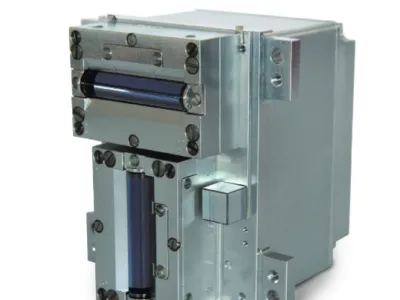
Commercial Integrated Digital Solar Sensor
- Model
- C-SS-APS-Img/P-2
- Measurement Accuracy
- ≤ 0.05° (3σ)
- Application
- Commercial satellite constellations
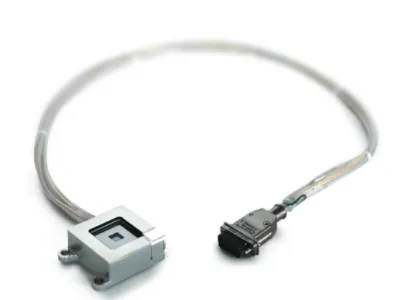
Dual-Axis Micro Analog Solar Sensor
- Model
- C-SS-SiC-Ana/B-2B
- Measurement Accuracy
- < 0.5°
- Flight Heritage
- First flight in 2015
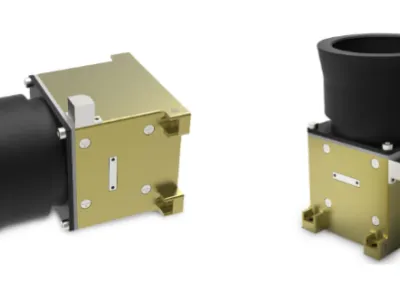
High-Dynamic Nano Star Sensor
- Dimensions (mm)
- 50 × 50 × 89.4
- Weight (g)
- 260
- Mounting Material
- 2A12 T4
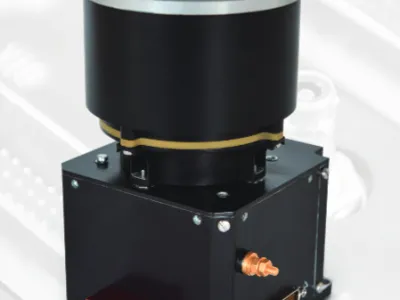
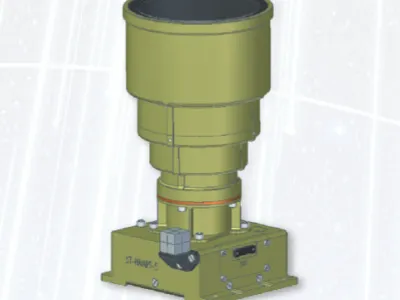
Long-Life Micro Star Sensor
- Model
- C-ST-HA-APS7-1
- Measurement Accuracy
- 5″ (3σ)
- Application
- Commercial satellite constellations
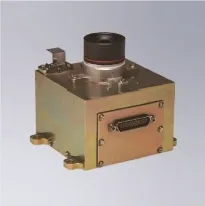
Long-Life Nano Star Sensor
- Model
- C-ST-MA-ASP1-1D
- Measurement Accuracy
- 5″ (3σ)
- Application
- Medium Earth Orbit satellites
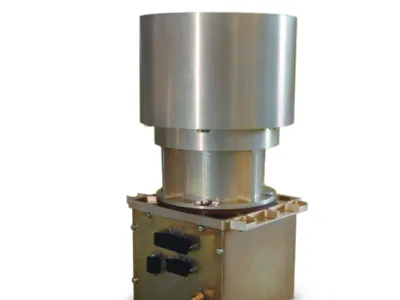
Nano Earth Sensor
- Accuracy
- ≤0.05° (3σ)
- Field of View (FOV)
- 160°
- Mass
- 250 g
Micro Star Sensor
- Model
- C-ST-MA-APS4-1
- Measurement Accuracy
- 3″ (3σ)
- Flight Heritage
- First flight in 2016
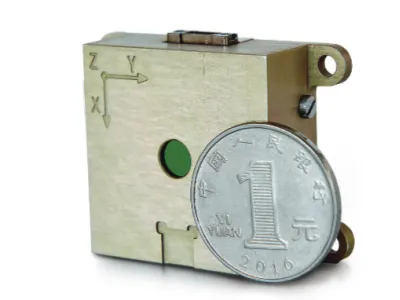
Monolithic Solar Sensor
- Measurement Accuracy
- 0.05° (3σ)
- Application
- Low Earth Orbit satellites
- Dimensions (mm)
- 35 × 35 × 15
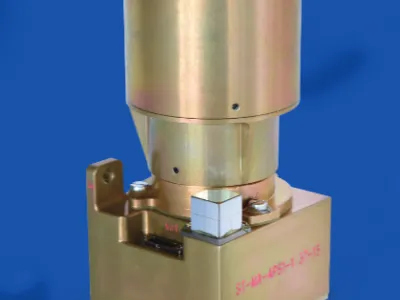
Nano Star Sensor
- Model
- C-ST-MA-APS1-1A
- Measurement Accuracy
- 10″ (statistical confidence not specified)
- Flight Heritage
- First flight in 2017
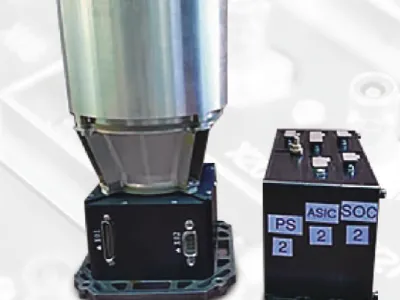
Split-Type Micro Star Sensor
- Model
- C-ST-HA-APS6-1
- Measurement Accuracy
- 3″ (3σ)
- Application
- High-precision remote sensing and mapping satellites
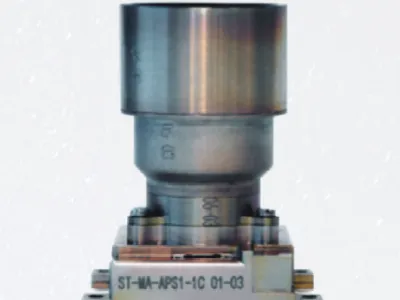
Ultra-Compact Star Sensor
- Measurement accuracy
- 30″ (3σ)
- Data update rate
- 5 Hz
- Dynamic performance
- 1°/s
Compare variants
Side-by-side specifications for variants in this category. Values are taken directly from each product's datasheet.
Accuracy values retain their published conditions. A value without a statistical confidence level must not be assumed to be a 3σ rating.
| Parameter | Micro Star Sensor | Nano Star Sensor | Long-Life Micro Star Sensor | Long-Life Nano Star Sensor | Split-Type Micro Star Sensor | High-Dynamic Nano Star Sensor |
|---|---|---|---|---|---|---|
| Model | C-ST-MA-APS4-1 | C-ST-MA-APS1-1A | C-ST-HA-APS7-1 | C-ST-MA-ASP1-1D | C-ST-HA-APS6-1 | — |
| Measurement Accuracy | 3″ (3σ) | 10″ (statistical confidence not specified) | 5″ (3σ) | 5″ (3σ) | 3″ (3σ) | — |
| Flight Heritage | First flight in 2016 | First flight in 2017 | — | — | — | — |
| Application | Micro and nanosatellites | Micro and nanosatellites | Commercial satellite constellations | Medium Earth Orbit satellites | High-precision remote sensing and mapping satellites | — |
| Dimensions (mm) | 86 × 85 × 208 | 40 × 42 × 86 | 100 × 100 × 132 | 56 × 56 × 150 | 110 × 110 × 195 (Head); 140 × 66 × 80 (Electronics) | 50 × 50 × 89.4 |
| Weight (g) | 900 | 108 | 480 | 150 | 830 (Head); 700 (Electronics, RS-422); 900 (Electronics, 1553B) | 260 |
| Mounting Material | 2A12 T4 | 2A12-H112 | 2A12 T4 | 2A12-H112 | 2A12 T4 | 2A12 T4 |
| Communication Interface | RS-422 | CAN / RS-422 / I²C | RS-422 | CAN / RS-422 / I²C | RS-422 / 1553B | RS-422 / CAN |
| Storage Temperature (°C) | −20 to +50 | −35 to +55 | −25 to +55 | −35 to +55 | −25 to +55 | −35 to +60 |
| Operating Temperature (°C) | −25 to +55 | −30 to +45 | −20 to +50 | −30 to +45 | −20 to +50 | −30 to +50 |
| Design Life | 5 years | — | 15 years | 5 years | 8 years | — |
| Qualification / Development Status | — | — | Completed qualification | Completed qualification | Completed qualification | — |