Product Gallery
Visual Overview
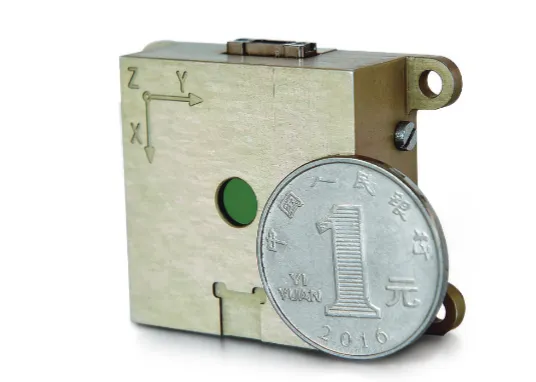
Specifications
Technical Details
Comprehensive specifications and technical information
Quick Overview
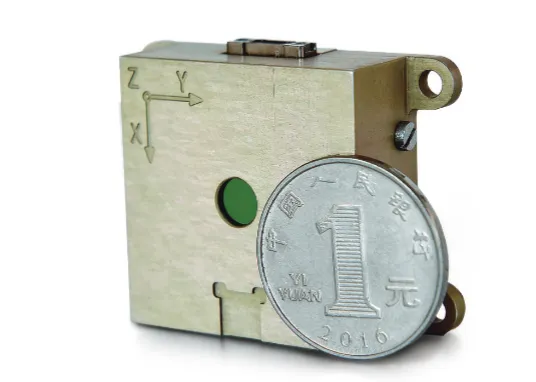
The monolithic solar sensor uses an APS image sensor as the photoelectric conversion detector.
Key Specifications
| Parameter | Value |
|---|---|
| Model | C-SS-SiC-ANA/B-2B |
| Measurement Accuracy | 0.05° (3σ) |
| Flight Heritage | Completed qualification |
| Application | Low Earth Orbit satellites |
| Dimensions (mm) | 35 × 35 × 15 |
| Weight (g) | 50 |
| Mounting Material | 2A12 T4 |
| Operating Temperature (°C) | −30 to +45 |
| Storage Temperature (°C) | −35 to +55 |
| Data Update Rate | ≥15 Hz |
| Communication Interface | RS-422 / CAN |
| Design Life | 2 years |
Key Features
- Low-cost design and implementation.
- Integrated opto-electronic structure with high integration.
- Lightweight and compact design.
- High adaptability to space environmental conditions.
Applications
- Used for solar vector detection and attitude determination in low-orbit satellite systems.
Documentation & Resources
Support
Frequently Asked Questions
Common questions about Monolithic Solar Sensor
What detector does the Monolithic Solar Sensor use?
It uses an APS image sensor as the photoelectric conversion detector and achieves a measurement accuracy of 0.05 degrees (3-sigma) with a data update rate of at least 15 Hz.
Which interfaces does the solar sensor provide?
It supports RS-422 and CAN interfaces. The sensor is compact at 35 x 35 x 15 mm and lightweight at about 50 g.
What is the design life and target orbit?
Model C-SS-SiC-ANA/B-2B has a 2-year design life, has completed qualification, and is used in low Earth orbit satellite systems.
What temperature range does it support?
It operates from -30 to +45 C and can be stored from -35 to +55 C, with a 2A12 T4 mounting material.