Visual Overview
Technical Details
Comprehensive specifications and technical information
Quick Overview
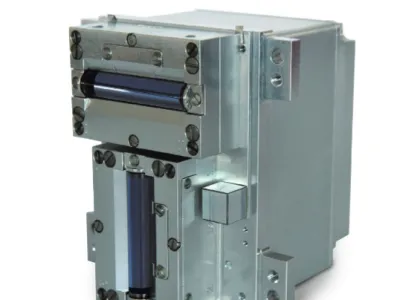
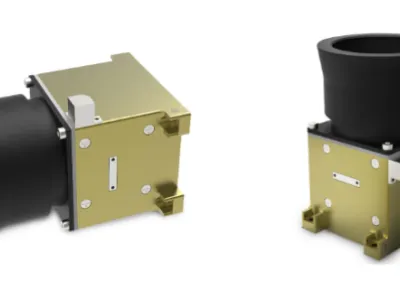
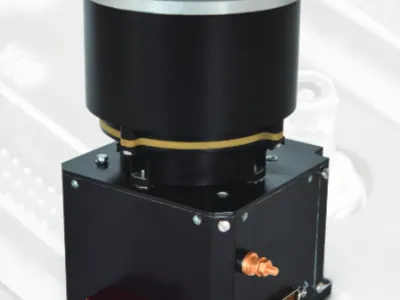
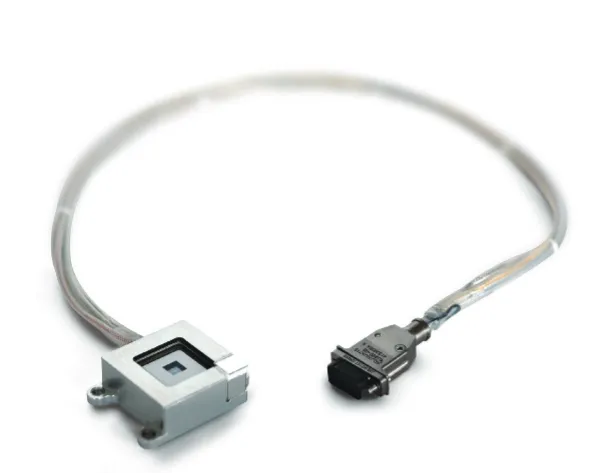
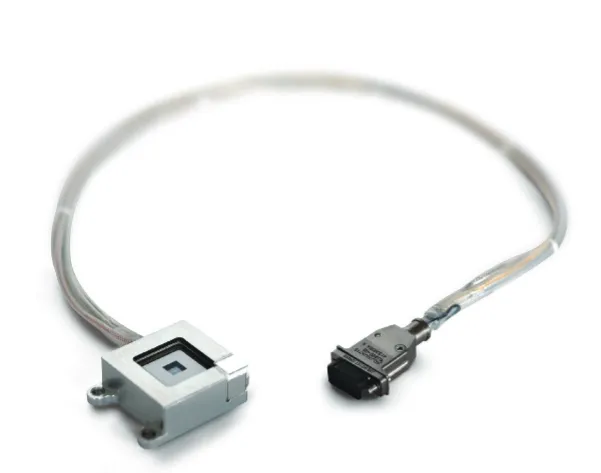
The dual-axis micro analog solar sensor uses four silicon photodiodes as the sensing elements to measure the solar incident angle in two axes.
Key Specifications
| Parameter | Value |
|---|---|
| Model | C-SS-SiC-Ana/B-2B |
| Measurement Accuracy | < 0.5° |
| Flight Heritage | First flight in 2015 |
| Application | Microsatellite |
| Dimensions (mm) | 40 × 34.5 × 13.5 |
| Weight (g) | 37 |
| Mounting Material | LY12 BCZYu |
| Operating Temperature (°C) | −100 to +90 |
| Storage Temperature (°C) | −105 to +105 |
| Communication Interface | Analog current signal output |
Key Features
- Low cost and high reliability.
- Lightweight and compact design.
- Wide operating temperature range and strong radiation resistance.
Applications
- Used in microsatellite systems for sun vector measurement and solar array attitude detection.
Documentation & Resources
Frequently Asked Questions
Common questions about Dual-Axis Micro Analog Solar Sensor
How does the Dual-Axis Micro Analog Solar Sensor measure sun angle?
It uses four silicon photodiodes as sensing elements to measure the solar incident angle in two axes, with a measurement accuracy better than 0.5 degrees.
What output interface does the sensor use?
The sensor provides an analog current signal output. It is compact at 40 x 34.5 x 13.5 mm and lightweight at about 37 g.
What temperature range can this solar sensor withstand?
It operates over a wide range of -100 to +90 C and can be stored from -105 to +105 C, with strong radiation resistance for space use.
Does the Dual-Axis Micro Analog Solar Sensor have flight heritage?
Yes. Model C-SS-SiC-Ana/B-2B first flew in 2015 and is used on microsatellites for sun vector measurement and solar array attitude detection.