Overview
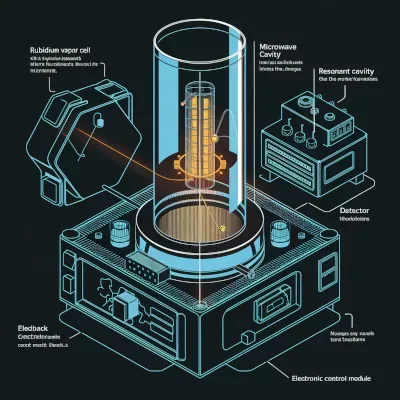
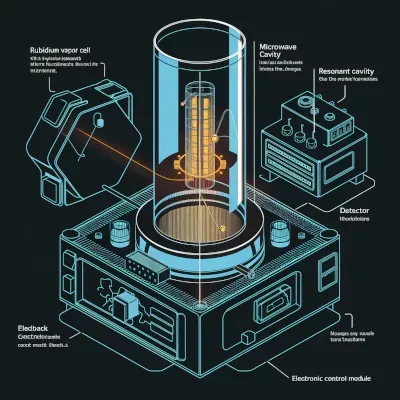
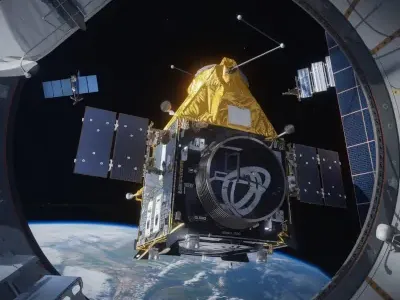
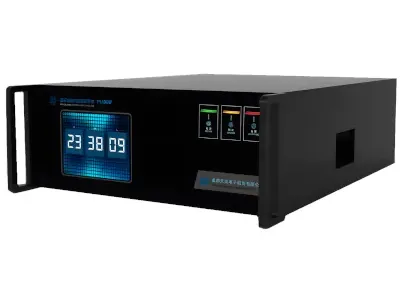
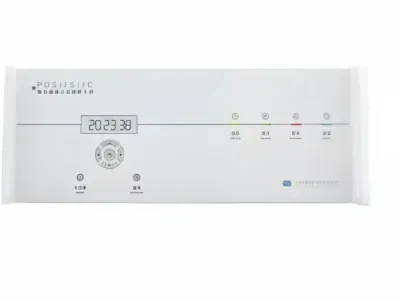
The XHTF1025-S CPT atomic clock is a high-performance, compact, and low-power-consumption device that provides a 10 MHz single output. It is designed for applications requiring high frequency accuracy and low power consumption. The XHTF1025-S CPT atomic clock is ideal for use in aerospace, defense, and other high-reliability applications.
Features
Technical Specifications
| Specification Item | Requirements |
|---|
| Nominal Frequency | 10 MHz |
| Product Weight | 1200 g (Max) |
| Number of Frequency Outputs | 1 |
| Channel Isolation | ≥ 50 |
Dimensions
| Item | Specification |
|---|
| Main Body | 86 × 86 × 42 mm³ |
| Maximum Envelope | 96 × 108 × 42 mm³ |
Operating Environment
| Parameter | Specification |
|---|
| Operating Temperature Range | Vacuum: -15℃ ~ +50℃ |
| Storage Temperature Range | Vacuum: -40℃ ~ +70℃ |
Power Characteristics
| Property | Specification |
|---|
| Power Supply | Standard 12 VDC, adaptable to 10.8–13.2 V |
| Maximum Power Consumption @ 12V | ≤ 12 W |
| Steady Power Consumption @ 12V | ≤ 6 W |
Frequency Accuracy
Free-running Mode
| Environment | Accuracy |
|---|
| Atmospheric | +25℃: Better than ±5 × 10⁻⁹ |
| Vacuum | +25℃: Better than ±5 × 10⁻¹⁰ |
Disciplined Mode
| Environment | Accuracy |
|---|
| Vacuum | +25℃, disciplined for 2 h: Better than ±5 × 10⁻¹² |
Frequency Output Signal Characteristics
| Property | Specification |
|---|
| Waveform | Sine Wave |
| Output Power | 8 ± 1 dBm (Load: 50 Ω) |
| Harmonics | ≤ -30 dBc |
| Spurious Signals | ≤ -70 dBc |
Frequency Stability (Allan Deviation)
| τ (s) | Stability |
|---|
| 1 | ≤ 3 × 10⁻¹⁰ |
| 10 | ≤ 1 × 10⁻¹⁰ |
| 100 | ≤ 3 × 10⁻¹¹ |
| 1000 | ≤ 1 × 10⁻¹¹ |
Frequency Temperature Coefficient
| Condition | Coefficient |
|---|
| Vacuum: -10℃ ~ +70℃ | ≤ ±1 × 10⁻¹⁰/℃ |
Frequency Reproducibility
| Parameter | Value |
|---|
| Frequency Reproducibility | < 2 × 10⁻¹⁰ |
| Frequency Drift Rate | < ±1 × 10⁻¹¹/day |
Phase Noise (10 MHz Output)
| Offset Frequency | Phase Noise (dBc/Hz) |
|---|
| 1 Hz | < -70 |
| 10 Hz | < -90 |
| 100 Hz | < -130 |
| 1 kHz | < -145 |
| 10 kHz | < -155 |
| 100 kHz | < -160 |
Magnetic Sensitivity
| Parameter | Value |
|---|
| Magnetic Sensitivity | < ±5 × 10⁻¹¹/Gauss |
1PPS Signal Characteristics
| Property | Specification |
|---|
| Number of Outputs | 1 |
| Output Level | RS422 Differential |
| Pulse Width | 1 ms ± 5 μs |
| Rise/Fall Time | < 10 ns |
| 1PPS Synchronization Error | ≤ 50 ns |
RS422 Frequency Adjustment
| Parameter | Specification |
|---|
| Adjustment Range | > ±1 × 10⁻⁸ |
| Adjustment Resolution | < 5 × 10⁻¹³/bit |
Reliability and Lifetime
| Parameter | Specification |
|---|
| In-Orbit Lifetime | > 5 years |
| Reliability | > 0.8 |
Electrical Interface and Pin Definitions
XS1: 1PPS Signal Transmission Interface (J30J-25ZK Series)
| Pin | Definition |
|---|
| 1, 14 | 1PPS2 Positive Output |
| 2, 15 | 1PPS2 Negative Output |
| 3, 16 | 1PPS1 Negative Output |
| 4, 17 | 1PPS1 Positive Output |
| 5, 18 | RS422 Tx Positive |
| 6, 19 | RS422 Tx Negative |
| 7, 20 | 1PPS2 Negative Input |
| 8, 21 | 1PPS2 Positive Input |
| 9, 22 | 1PPS1 Positive Input |
| 10, 23 | 1PPS1 Negative Input |
| 11, 24 | RS422 Rx Positive |
| 12, 25 | RS422 Rx Negative |
| 13 | Chassis Ground |
XS2: Power Interface (J30J-9ZK Series)
| Pin | Definition |
|---|
| 1, 5 | Chassis Ground |
| 2, 3, 4 | Power Bus 12V |
| 6, 7, 8 | Return Line 12V |
| 9 | Not Connected (NC) |
XS3: 10 MHz Signal Output Interface (SMA-K)
| Pin | Definition |
|---|
| 1 | 10 MHz Signal Output |
| 2 | Signal Ground |
Thermal Interface
| Property | Specification |
|---|
| Exterior Material | Hard Aluminum Alloy 2A12, Blackened |
| Base Material | Hard Aluminum Alloy 2A12 |
| Contact Area | 13796 mm² |
| Base Flatness | ≤ 0.1 mm/100 mm × 100 mm |
| Base Surface Roughness | Better than 3.2 μm |
Environmental Adaptability Requirements
| Test Type | Acceptance Level | Qualification Level |
|---|
| Thermal Cycling Test | -25℃ ~ +45℃, 12.5 cycles | -25℃ ~ +45℃, 25.5 cycles |
| Thermal Vacuum Test | -25℃ ~ +45℃, 3.5 cycles | -25℃ ~ +45℃, 6.5 cycles |
| Shock Test | — | 100 g, three directions, 3 times |
| Sine Vibration | 10 g, 4 oct/min, three directions | 15 g, 2 oct/min, three directions |
| Random Vibration | 11.2 g RMS, three directions, 1 min/dir | 17.6 g RMS, three directions, 2 min/dir |
| Acceleration | — | 13 g, six directions, 5 min/dir |
| Magnetic Sensitivity | ≤ 5 × 10⁻¹¹/Gauss | — |
Notes
- All listed requirements are mandatory and serve as the basis for product testing.
- The serial number is 7 digits long: the first 4 digits indicate the batch number, and the last 3 digits indicate the sequence number.
- Detailed environmental test conditions can be found in the “Product Specification” document.
References
For more information on atomic clock technology and frequency standards, visit The National Institute of Standards and Technology (NIST).
For further information, please contact us.