Visual Overview
Technical Details
Comprehensive specifications and technical information
Overview
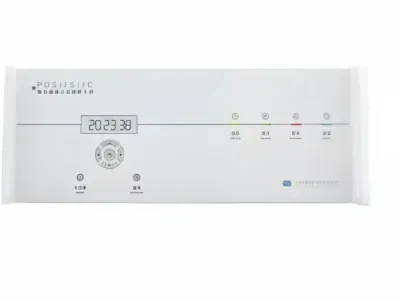
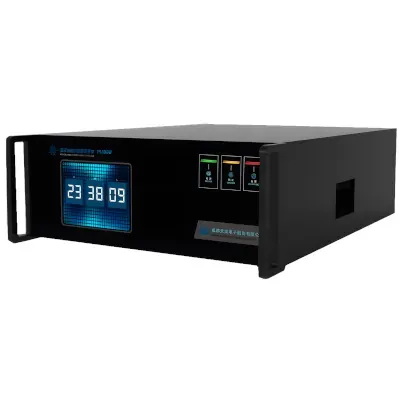
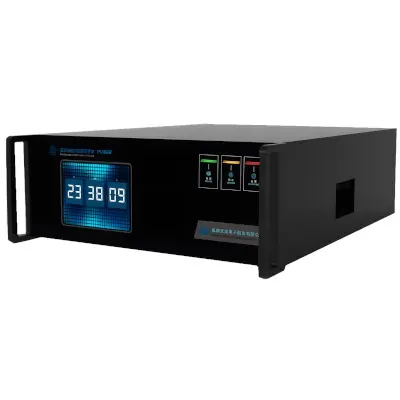
The TA1000 Optically-pumping Cesium Atomic Clock is designed as an optically pumped cesium-beam frequency standard. It offers outstanding stability and accuracy for both laboratory and field environments. With a 30-day averaging time stability specification, the TA1000 ensures long-term predictable performance for applications like time synchronization, telecommunications, and high-precision measurement systems. For inquiries, please contact us.
Features
- Touch-based menu-driven operation for ease of use.
- Advanced optically-pumped technology for high accuracy.
- Easy-to-read clock and message displays.
- Comprehensive status monitoring with automatic event logging.
- Supports automatic synchronization of 1PPS signals.
- Full clock and frequency control capabilities.
Main Specifications
General Specifications
| Specification | Details |
|---|---|
| Frequency Accuracy | ≤1E-12 |
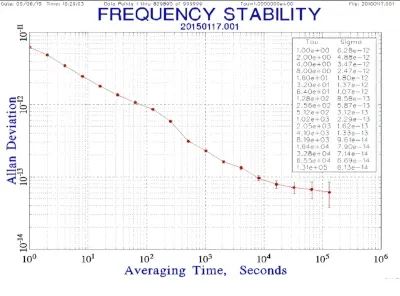
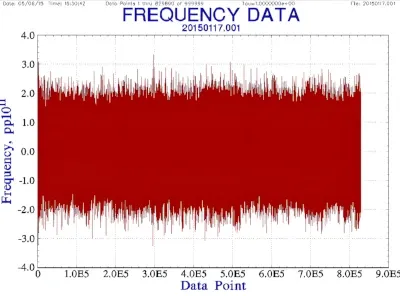
| Frequency Stability | ≤1.2E-11/1s ≤8.5E-12/10s ≤2.7E-12/100s ≤8.5E-13/1000s ≤2.7E-13/10000s ≤8.5E-14/100000s |
| Frequency Reproducibility | ≤5E-13 |
| Manual Sync Range | ±1E-9 |
| Resolution | 1E-15 |
| Power Voltage | 22VDC~75VDC 220V 50Hz VAC |
| Power Consumption | Warm-up: ≤190W Stable: ≤110W |
| Operating Temperature | -10°C to +40°C |
| Storage Temperature | -20°C to +50°C |
| Warm-up Time | ≤40min at +20°C ≤2 hours at -10°C |
| Weight | ≤40 kg |
| External Dimensions | 598 x 456 x 177 mm (19-inch, 4U) |
| MTBF | ≥100,000 hours |
| Atmospheric pressure | ≤5.0E-13/ sea level 0~3km |
| Magnetic field | ≤3.0E-13/ ±1 Gauss |
| Vibration | Be adapted to the 3rd class highway or railway transportation. |
| Service life | ≥8 years |
Output Signals
| Signal Type | Details |
|---|---|
| 10 MHz Sine Wave | Channels: 2 Amplitude: 7~13 dBm Harmonic: ≤-40 dBc Non-harmonic: ≤-80 dBc Phase Noise: @1Hz: ≤-90 dBc/Hz @10Hz: ≤-125 dBc/Hz @100Hz: ≤-140 dBc/Hz @1kHz: ≤-150 dBc/Hz @10kHz: ≤-150 dBc/Hz |
| 5 MHz Sine Wave | Channels: 2 Power: 7~13 dBm |
| 1PPS TTL | Rising time: ≤10 ns Jitter: ≤1 ns Sync accuracy: ≤20 ns Sync Input: 1PPS TTL |
Applications
- Calibration of counters, frequency meters, spectrum and network analyzers.
- References for DTV, DAB, VHF, UHF & PMR TX, CMDA, Tetra, and IPTV systems.
- Production test frequency standards.
- Network time protocol for financial, utilities, security, and communications.
- OEM and calibration labs, radio workshops, and test labs.
| Performance | |
|---|---|
| Frequency accuracy | ≤1E-12 |
| Frequency stability | ≤1.2E-11 (1 s) |
| Frequency stability | ≤8.5E-12 (10 s) |
| Frequency stability | ≤2.7E-12 (100 s) |
| Frequency stability | ≤8.5E-13 (1000 s) |
| Frequency stability | ≤2.7E-13 (10000 s) |
| Frequency stability | ≤8.5E-14 (100000 s) |
| Frequency reproducibility | ≤5E-13 |
| Manual sync range | ±1E-9 |
| Resolution | 1E-15 |
| Electrical | |
| Power voltage | 22VDC~75VDC |
| Power voltage | 220V 50Hz VAC |
| Power consumption | ≤190W (warm-up) |
| Power consumption | ≤110W (stable) |
| Mechanical | |
| Weight | ≤40 kg |
| External dimensions | 598 × 456 × 177 mm (19-inch, 4U) |
| Environmental | |
| Operating temperature | -10°C to +40°C |
| Storage temperature | -20°C to +50°C |
| Warm-up time | ≤40 min (+20°C) |
| Warm-up time | ≤2 hours (-10°C) |
| MTBF | ≥100,000 hours |
| Service life | ≥8 years |
| Atmospheric pressure | ≤5.0E-13 (sea level 0~3 km) |
| Magnetic field | ≤3.0E-13 (±1 Gauss) |
| Vibration | Be adapted to the 3rd class highway or railway transportation. |
| Output | |
| 10 MHz output channels | 2 |
| 10 MHz amplitude | 7~13 dBm |
| 10 MHz harmonic | ≤-40 dBc |
| 10 MHz non-harmonic | ≤-80 dBc |
| 10 MHz phase noise | ≤-90 dBc/Hz (@1 Hz) |
| 10 MHz phase noise | ≤-125 dBc/Hz (@10 Hz) |
| 10 MHz phase noise | ≤-140 dBc/Hz (@100 Hz) |
| 10 MHz phase noise | ≤-150 dBc/Hz (@1 kHz) |
| 10 MHz phase noise | ≤-150 dBc/Hz (@10 kHz) |
| 5 MHz output channels | 2 |
| 5 MHz power | 7~13 dBm |
| 1PPS rising time | ≤10 ns |
| 1PPS jitter | ≤1 ns |
| 1PPS sync accuracy | ≤20 ns |
| 1PPS sync input | 1PPS TTL |
Frequently Asked Questions
Common questions about TA1000 Optically-pumping Cesium Atomic Clock
What frequency accuracy and stability does the TA1000 provide?
The TA1000 delivers a frequency accuracy of ≤1×10⁻¹², frequency reproducibility of ≤5×10⁻¹³, and Allan deviation stability from ≤1.2×10⁻¹¹ at 1 s to ≤8.5×10⁻¹⁴ at 100,000 s over a 30-day averaging time, suiting it as a primary reference for calibration and timing laboratories.
What form factor and power does the TA1000 require?
It is built as a 598×456×177 mm 19-inch 4U rack unit weighing ≤40 kg. It runs from 22–75 VDC or 220 V 50 Hz AC, drawing ≤190 W during warm-up and ≤110 W in steady state, with warm-up completing in ≤40 min at +20°C.
What output signals does the TA1000 provide?
It offers two channels of 10 MHz sine wave (7–13 dBm) and two channels of 5 MHz sine wave, plus a 1PPS TTL output with ≤1 ns jitter and ≤20 ns synchronization accuracy. Phase noise on the 10 MHz output is ≤-90 dBc/Hz at 1 Hz and ≤-150 dBc/Hz at 1 kHz.
In what operating environment can the TA1000 be used?
The TA1000 operates from -10°C to +40°C and is rated for 3rd-class highway or railway transport, supporting both laboratory and field use. Its MTBF is ≥100,000 hours and service life is ≥8 years.
What applications is the TA1000 designed for?
It serves as a reference for calibrating counters, frequency meters, and spectrum and network analyzers, as a production-test frequency standard, and for network time protocol in financial, utility, security, and communications systems.