Visual Overview
Technical Details
Comprehensive specifications and technical information
Overview
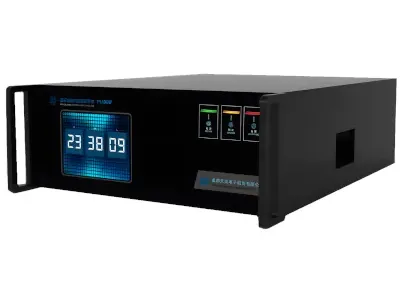
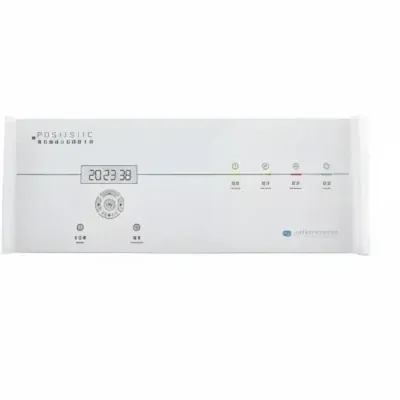
The TA1100 Optically-pumping Cesium Atomic Clock is a high-performance atomic clock that adopts optical-pumping and laser test technologies. With compact size, low power consumption, and excellent frequency stability, it is tailored for time synchronization, frequency measurement, and atomic timekeeping systems. For inquiries, please contact us.
Features
- Adopt optical-pumping and laser test technology.
- Small size, low consumption, and high performance.
- Automatically monitor and record operation status.
- Wide operating temperature range.
Main Specifications
General Specifications
| Specification | Details |
|---|---|
| Frequency Accuracy | ≤1E-12 |
| Frequency Stability | ≤1.2E-11/1s ≤8.5E-12/10s ≤2.7E-12/100s ≤8.5E-13/1000s ≤2.7E-13/10000s ≤8.5E-14/100000s |
| Frequency Reproducibility | ≤5E-13 |
| Manual Sync Range | ±1E-9 |
| Resolution | 1E-15 |
| Warm-up Time | ≤40min at +20°C ≤2 hours at -10°C |
| Power Voltage (Customizable) | DC: -40VDC AC: 100VAC |
| Power Consumption | Warm-up: ≤130W (DC supply) Stable: ≤80W (DC supply, 25°C) |
| Operating Temperature | -10°C to +40°C |
| Storage Temperature | -20°C to +50°C |
| Weight | ≤30 kg |
| External Dimensions | 45 x 45.6 x 177 mm³ |
| MTBF | ≥100,000 hours |
| Service Life | ≥8 years |
Output Signals
| Signal Type | Details |
|---|---|
| 10 MHz Sine Wave (Standard) | Channels: 2 Amplitude: 7~13 dBm Harmonic: ≤-40 dBc Non-harmonic: ≤-80 dBc Phase Noise: @1Hz: ≤-90 dBc/Hz @10Hz: ≤-125 dBc/Hz @100Hz: ≤-140 dBc/Hz @1kHz: ≤-150 dBc/Hz @10kHz: ≤-150 dBc/Hz |
| 2.048 MHz (Optional) | Channels: 2 Signal Feature: FPGA Code |
| 1PPS TTL (Optional) | Signal Level: 5V TTL Rising Time: ≤10 ns Sync Accuracy: ≤20 ns Jitter: ≤1 ns |
Applications
- Atomic time-keeping clock sets.
- Communication, power, and transportation industries.
- Time synchronization systems.
- Precision time-frequency measurement.
Frequently Asked Questions
Common questions about TA1100 Optically-pumping Cesium Atomic Clock
What makes the TA1100 suitable for embedded timing systems?
The TA1100 combines optical-pumping and laser-test technology in a compact, low-power package weighing ≤30 kg. It accepts a wide supply range (-40 to 60 VDC or 100–240 VAC, 45–55 Hz) and consumes ≤130 W during warm-up and ≤80 W in steady state at 25°C, easing integration into communication, power, and transportation systems.
What frequency accuracy and stability does the TA1100 deliver?
It provides a frequency accuracy of ≤1×10⁻¹² and frequency reproducibility of ≤5×10⁻¹³, with Allan deviation from ≤1.2×10⁻¹¹ at 1 s down to ≤8.5×10⁻¹⁴ at 100,000 s. Warm-up completes in ≤40 min at +20°C.
What output signals does the TA1100 offer?
The standard output is two channels of 10 MHz sine wave (7–13 dBm) with phase noise of ≤-90 dBc/Hz at 1 Hz and ≤-150 dBc/Hz at 1 kHz. Optional 2.048 MHz FPGA-coded outputs and a 5 V TTL 1PPS signal (≤20 ns sync accuracy, ≤1 ns jitter) are also available.
What operating temperature range and lifetime does the TA1100 support?
The TA1100 operates from -10°C to +40°C with a storage range of -20°C to +50°C, an MTBF of ≥100,000 hours, and a service life of ≥8 years.
What are the TA1100's typical applications?
It is used in atomic time-keeping clock sets, time synchronization systems, and precision time-frequency measurement, and across the communication, power, and transportation industries.