Spacecraft Mechanisms
Precision attitude control mechanisms including reaction wheels, magnetic torquers, gyroscopes, and drive mechanisms for spacecraft actuation
12 products
Overview
Spacecraft mechanisms include reaction wheels, magnetic torquers, control moment gyroscopes, inertial sensors and drive mechanisms. Angular momentum (N·m·s), torque (N·m) and magnetic dipole moment (A·m²) describe different physical quantities and must be compared separately.
Mechanism Categories
Reaction Wheels
The 090, 130 and 160 wheels provide different momentum capacities and control interfaces.
Magnetic Torquers
Micro magnetic torquers and combined flywheel/torquer assemblies support magnetic actuation and wheel momentum management.
Gyroscopes & CMGs
Rate sensors measure rotation; control moment gyroscopes produce control torque. These are distinct roles even though both product names may contain “gyroscope”.
Drive Mechanisms
Solar array and antenna drives provide controlled deployment or pointing for their associated structures.
Performance Specifications
| Product | Parameter | Published value |
|---|---|---|
| 090 reaction wheel | Rated momentum / mass | 0.12 N·m·s / ≤0.75 kg |
| 130 reaction wheel | Rated momentum / mass | 0.5 N·m·s / 2.1 ±0.3 kg |
| 160 reaction wheel | Rated momentum / mass | 4 N·m·s / ≤3.8 kg |
| Micro magnetic torquer | Magnetic dipole moment | 0.5, 1 or 10 A·m², by model |
| Dual-axis antenna drive | Output torque | >3 N·m |
| Extended-arm solar array drive | Output torque | ≥10 N·m |
Frequently Asked Questions
What is the angular momentum capacity of reaction wheels?
The 090, 130 and 160 models list 0.12, 0.5 and 4 N·m·s respectively. These are angular momentum capacities, not torque ratings; request the torque-speed characteristics needed for your maneuver profile.
How do reaction wheels and magnetic torquers work together?
Reaction wheels exchange angular momentum with the spacecraft. Magnetic torquers interact with the ambient magnetic field and can support wheel desaturation where that field provides suitable control authority.
What is the expected lifetime of these mechanisms?
Design life is model-specific. The VSCMG lists 5 years and the Coriolis vibratory gyroscope lists 8 years. Review duty cycle and qualification conditions for the intended application.
Can I use multiple reaction wheels for redundancy?
A suitable wheel arrangement can provide redundancy. Confirm control authority after a failure, wheel orientation, interface requirements and spacecraft control algorithms as part of the system design.
What control interfaces are available?
The 130 wheel lists an analog interface; the 090 and 160 wheels list RS-422 or CAN. Other mechanisms have their own interface requirements.
Control Modes
- Momentum Bias: Maintain a nominal stored wheel momentum as part of the attitude-control design.
- Momentum Dumping: Transfer accumulated wheel momentum using external actuators such as magnetic torquers or thrusters.
- Slew Maneuvers: Change spacecraft attitude within the selected actuators’ torque and momentum limits.
- Fine Pointing: Coordinate sensors and actuators to meet the mission pointing requirement.
Integration Support
Check mounting, power, interface, thermal range, disturbance characteristics and qualification records for the selected mechanism. Request technical information.
Last updated:
Available products
12 products in Spacecraft Mechanisms
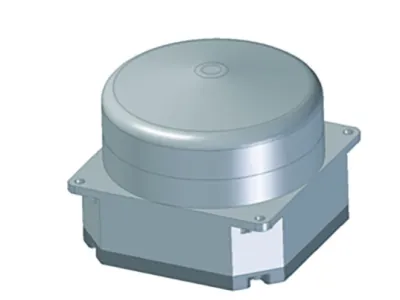
090 Digital Reaction Wheel
- Model
- C-SRWMI-090-0.1A
- Rated Momentum
- 0.12 N·m·s
- Flight Heritage
- First flight in 2016
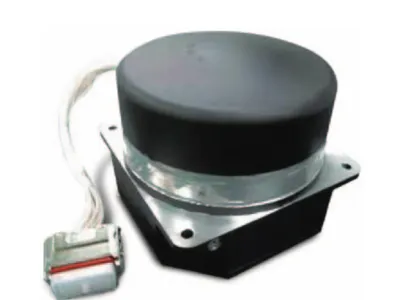
130 Standard Reaction Wheel
- Model
- C-GRWMI-130-0.5A
- Rated Momentum
- 0.5 N·m·s
- Flight Heritage
- First flight in 2012
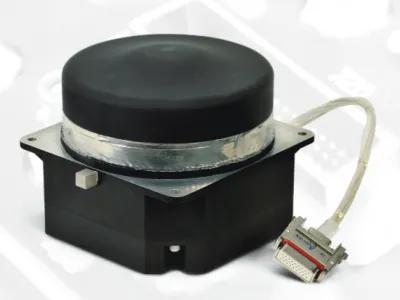
160 Digital Reaction Wheel
- Model
- C-SRWMI-160-4A
- Rated Momentum
- 4 N·m·s
- Flight Heritage
- First flight in 2015
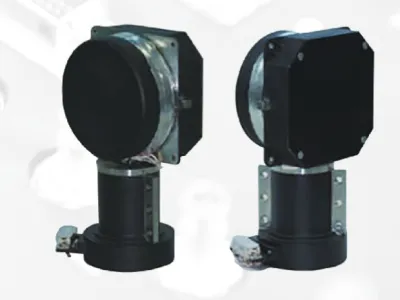
5 N·m·s Variable-Speed Control Moment Gyroscope (VSCMG)
- Model
- C-CMG-5/5-A
- Rated Momentum
- 5 N·m·s
- Flight Heritage
- First flight in 2012
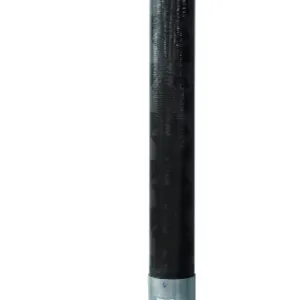
Extended-Arm Dual-Axis Solar Array Drive Mechanism
- Model
- C-SADM-3-3B
- Output Torque
- ≥ 10 N·m
- Flight Heritage
- 2019
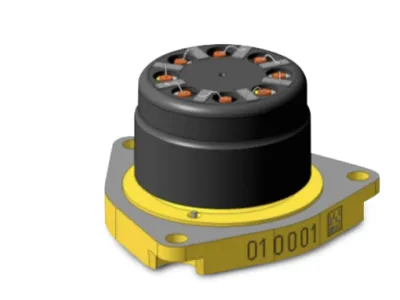
Metal Coriolis Vibratory Gyroscope (CVG)
- Dimensions (mm)
- B110 × L110 × H90
- Weight (g)
- 1000
- Power Consumption
- ≤ 6 W
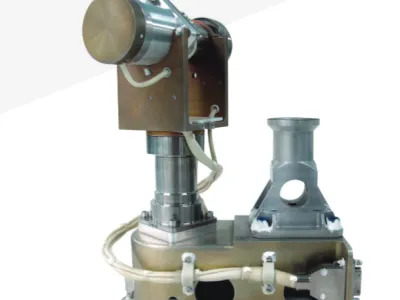
Micro Dual-Axis Antenna Drive Mechanism
- Model
- C-GDAM/A-11-3A
- Output Torque
- > 3 N·m
- Flight Heritage
- 2019
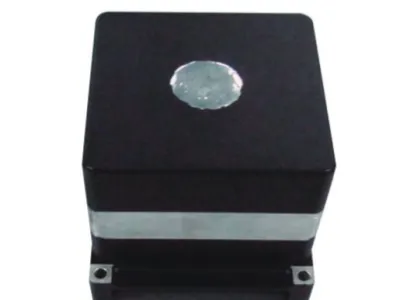
Micro Flywheel Combination
- Model
- C-AOFW-3-1A
- Rated Momentum
- 60 mN·m·s
- Application
- Microsatellite
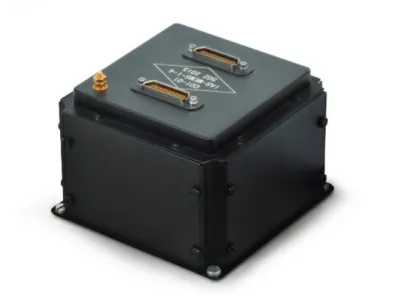
Micro Inertial Attitude Sensor
- Model
- C-IAS-M-EMS-4
- Measurement Accuracy
- < 3.3°/h
- Flight Heritage
- First flight in 2015
Micro Integrated Electromechanical Solar Array Drive Mechanism
- Model
- C-SADM-4-2A
- Transmission Power
- ≥ 1 kW
- Application
- Microsatellite
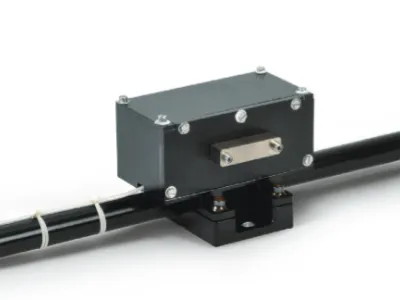
Micro Magnetic Torquer
- Model
- C-GMAT-0.5 / C-GMAT-1 / C-GMAT-10 / CGMAT(I)-10
- Magnetic Moment
- 0.5 A·m² / 1 A·m² / 10 A·m²
- Flight Heritage
- 2015–2019 (multiple flight missions)
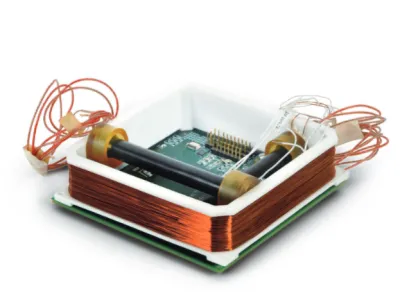
Micro-Nano Flywheel and Magnetic Torquer Assembly
- Model
- C-AOWM-3-3-1A
- Rated Momentum
- 0.4 mN·m·s
- Application
- Nanosatellite
Compare variants
Side-by-side specifications for variants in this category. Values are taken directly from each product's datasheet.
| Parameter | 090 Digital Reaction Wheel | 130 Standard Reaction Wheel | 160 Digital Reaction Wheel |
|---|---|---|---|
| Model | C-SRWMI-090-0.1A | C-GRWMI-130-0.5A | C-SRWMI-160-4A |
| Rated Momentum | 0.12 N·m·s | 0.5 N·m·s | 4 N·m·s |
| Flight Heritage | First flight in 2016 | First flight in 2012 | First flight in 2015 |
| Application | Microsatellite | Micro/Nanosatellite | Microsatellite |
| Dimensions (mm) | 101 × 101 × 82 | 135 × 135 × 110 | 160 × 160 × 135 |
| Operating Temperature (°C) | −5 to +45 | −5 to +45 | −5 to +45 |
| Storage Temperature (°C) | −10 to +50 | −10 to +50 | −10 to +50 |
| Communication Interface | RS-422 or CAN | Analog Interface | RS-422 or CAN |
| Weight (kg) | ≤ 0.75 | 2.1 ± 0.3 | ≤ 3.8 |