Visual Overview
Technical Details
Comprehensive specifications and technical information
Introduction
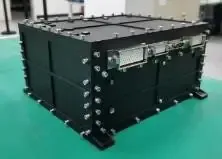
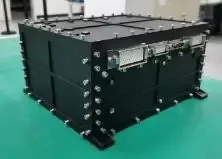
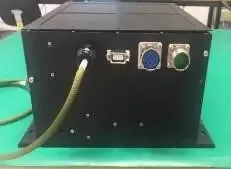
The energy storage and management units for commercial rockets feature a fully enclosed integrated design, incorporating intelligent data processing, SOC estimation, fault warning, autonomous temperature control, with optional 32 V, 160 V, 270 V, and 400 V platform. Featuring multiple input and output interfaces, the product series meets diverse power supply needs of various rocket systems.
Product Image
Key Features
- Platformization: Modular design, cascading expandability.
- High Reliability: Balanced management of core batteries, mature battery screening standards, extending battery lifespan.
- Intelligence: Intelligent integrated management system enabling millisecond-level autonomous coordinated control, multiple safety protections.
Technical Characteristics
| Typical Model | 32 V Platform Rocket Battery System | 160 V Platform Rocket Battery System | 270 V Platform Rocket Battery System |
|---|---|---|---|
| Operating Voltage (V) | 26~34 | 160±30 | 270±30 |
| Typical Weight(kg) | 5.6 | 15 | 20 |
| Size (mm) | 236×218×125 | 340×285×175 | 375×355×190 |
| Pulse Operating Current (A) | 66.2 | 60 | 60 |
| Software Level | C Class | C Class | C Class |
| Function | CAN bus provides real-time transmission of voltage, current, temperature, SOC, and other status information. It has the function to receive on/off power commands. | RS422/CAN serial asynchronous full-duplex transmission mode, with functions including voltage limiting, short-circuit protection, overcharge protection, reverse current protection, status detection (switch, voltage, current, temperature, etc.), fault alarm, etc. |
Typical Applications
Different electrical devices for various systems in commercial rockets and reusable spacecraft.
Explore more of our flexible and rigid solar energy solutions
Frequently Asked Questions
Common questions about Advanced Energy Storage Units for Commercial Rockets and Spacecraft
What voltage platforms does the Energy Storage Series support?
The series is offered in 32 V, 160 V, and 270 V platforms, with a 400 V option, covering operating voltages of 26–34 V, 160±30 V, and 270±30 V respectively. A modular, cascading design lets these platforms expand to match the power buses of different rocket systems.
How much do the units weigh and what are their dimensions?
Typical weights are 5.6 kg for the 32 V system (236×218×125 mm), 15 kg for the 160 V system (340×285×175 mm), and 20 kg for the 270 V system (375×355×190 mm). Pulse operating currents are 66.2 A for the 32 V system and 60 A for the 160 V and 270 V systems.
How do the units communicate and protect the battery?
The 32 V system uses a CAN bus to transmit voltage, current, temperature, and SOC in real time and to receive power on/off commands. The higher-voltage systems add RS422/CAN full-duplex control with voltage limiting, short-circuit protection, overcharge protection, reverse-current protection, status detection, and fault alarms.
What management and safety features are built in?
The fully enclosed integrated design provides intelligent data processing, SOC estimation, fault warning, and autonomous temperature control. Balanced management of the core cells and millisecond-level coordinated control deliver multiple layers of safety protection.
What are these energy storage units designed for?
They power the various electrical systems of commercial rockets and reusable spacecraft. The platformized, modular design expands through cascading to meet the differing power requirements of individual rocket systems.