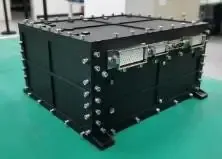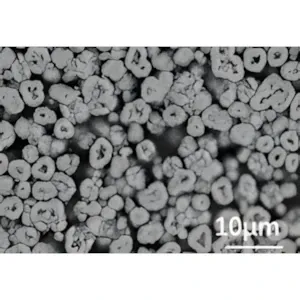
Visual Overview

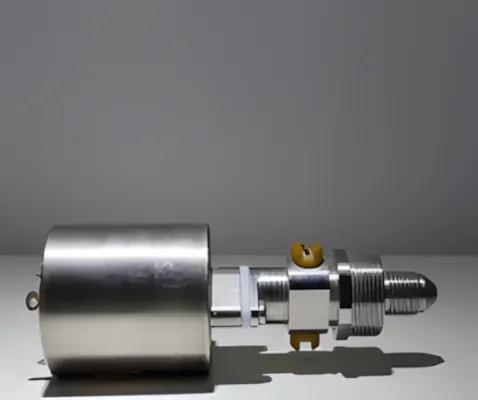
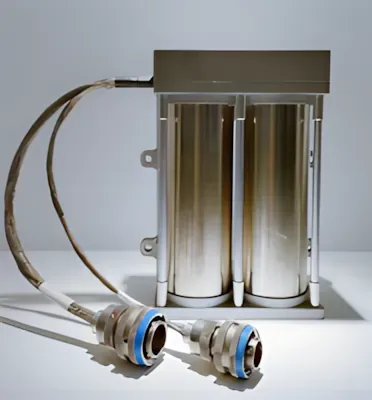
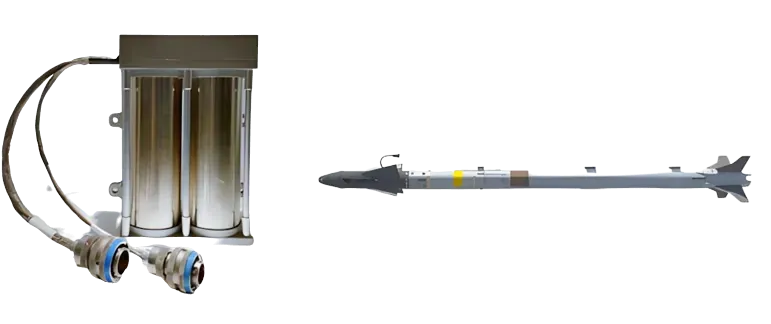
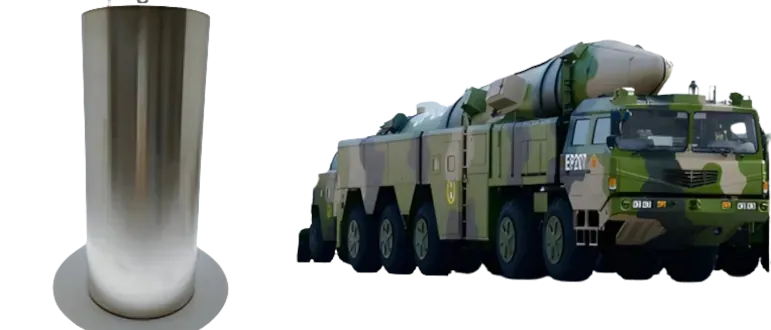
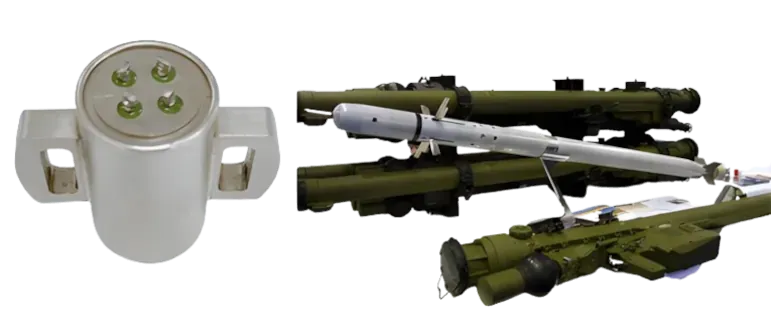
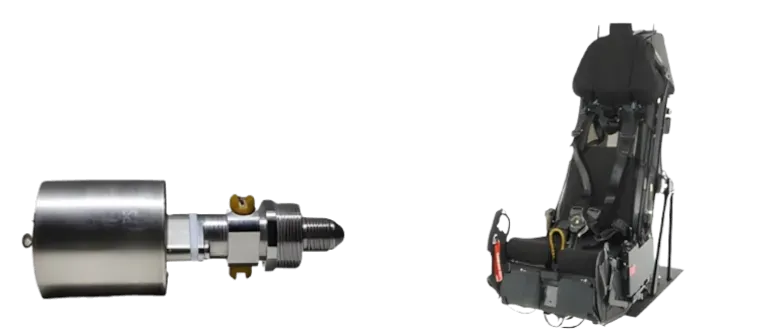
Technical Details
Comprehensive specifications and technical information
High-Temperature Lithium Batteries Overview
Our high-temperature lithium batteries offer specialized solutions for aerospace applications, each designed with unique features like long operational life, rapid activation, and high power output.
1. Long-Operating-Time High-Temperature Lithium Battery
- Product Features: Long operating time, long storage life, strong pulse capability.
- Applications: Applied in long-range missiles and cruise missiles.
Parameters
| Dimension (mm) | Nominal Capacity | Nominal Voltage (V) | Weight (kg) | Product Model and Performance Parameters | ||
|---|---|---|---|---|---|---|
| 85 | 175 | ≤180A | 1150 s @ 20 A; 750 s @ 30 A | 28 | ≤2.75 | 2HRD1: [Activation range: 24-33V; Steady current: 19.5 A; Activation time: 1.0 s; Operating time: 100 s] |
| 100 | 295 | ≤150A | 3000 s @ 20 A; 2000 s @ 30 A | 28 | ≤6.20 | 2HRD5: [Voltage range: 25-32V; Steady current: 11.7 A; Activation time: 1.5 s; Operating time: 150 s] |
2. Quick-Activated High-Temperature Lithium Battery
- Product Features: Short activation time at millisecond level; highest activation performance in China.
- Applications: Applied in aircraft life-saving ejection seats.
Parameters
| Dimension (mm) | Nominal Capacity | Nominal Voltage (V) | Weight (kg) | Product Model and Performance Parameters | ||
|---|---|---|---|---|---|---|
| 40 | 40 | 300 s @ 0.25 A | ≤7.5A | 22 | ≤7.5 | 2HRD10ML: [Activation time: 0.1 s; Voltage range: 15-28V; Steady current: 0.25 A; Pulse width: 60 s loaded at 0.3, 1.8, 2.4, and 3.0%] |
| 48 | 87 | 300 s @ 3 A | ≤10A | 25 | ≤0.2 | 2HRD25ML: [Activation time: 1 s; Voltage: 15-28V; Pulse: < 10 A; Operating time: 300 s] |
3. High-Voltage, Ultra-High-Power High-Temperature Lithium Battery
- Product Features: High voltage, ultra-high power output, excellent no-load safety.
- Applications: Applied in aviation missile systems.
Parameters
| Dimension (mm) | Nominal Capacity | Nominal Voltage (V) | Weight (kg) | Product Model and Performance Parameters | ||
|---|---|---|---|---|---|---|
| 95 | 290 | 2400 s @ 10 A; 800 s @ 30 A | ≤120A | 90 | ≤5.25 | 95HRD25ML: [Voltage range: 74-90V; Activation time: 1.2 s; Operating time: 160 s] |
| 110 | 370 | 4000 s @ 10 A; 800 s @ 50 A | ≤300A | 100 | ≤8.40 | 110HRD50ML: [Voltage range: 74-90V; Activation time: 1.0 s; Operating time: 90 s] |
4. Micro High-Temperature Lithium Battery
- Product Features: Small size and lightweight.
- Applications: Applied in individual weapons and small caliber shells.
Parameters
| Dimension (mm) | Nominal Capacity | Nominal Voltage (V) | Weight (kg) | Product Model and Performance Parameters | ||
|---|---|---|---|---|---|---|
| 18 | 36 | 60 s @ 1 A; 15 s @ 3 A | ≤6A | 28 | ≤0.035 | 18HRDML: [Activation time: < 0.5 s; Voltage range: 24-28V; Pulse with 0.05%] |
| 28 | 52 | 300 s @ 1 A; 55 s @ 5 A | ≤16A | 28 | ≤0.095 | 28HRDML: [Voltage range: 24-28V; Activation time: 1 s; Operating time: 180 s] |
Frequently Asked Questions
Common questions about High-Temperature Lithium Batteries for Aerospace Applications
What type of battery is the high-temperature lithium battery?
It is a thermally-activated reserve lithium battery that stays inert during storage and activates on demand, combining long storage life with rapid activation and strong pulse capability. The range covers long-operating-time, quick-activated, high-voltage ultra-high-power, and micro variants.
How quickly do these batteries activate?
Activation time depends on the variant. The quick-activated 2HRD10ML reaches operation in 0.1 s, the long-operating 2HRD1 in 1.0 s, and the high-voltage 95HRD25ML in 1.2 s, while the micro 18HRDML activates in under 0.5 s.
How long can these batteries deliver power?
Operating times range from tens of seconds to several thousand seconds by variant. The long-operating 2HRD5 sustains 3000 s at 20 A, the high-voltage 110HRD50ML delivers 4000 s at 10 A, and the micro 28HRDML runs 300 s at 1 A.
What voltage and current ranges are available?
Nominal voltages span roughly 22 V to 100 V across the range. The high-voltage ultra-high-power variants operate at 74–90 V with peak currents up to ≤300 A (110HRD50ML), while the compact micro variants stay in the ≤6–16 A range.
What applications are these batteries used in?
Long-operating-time units serve long-range and cruise missiles, quick-activated units serve aircraft ejection seats, high-voltage ultra-high-power units serve aviation missile systems, and micro units serve individual weapons and small-caliber shells.