Visual Overview
Technical Details
Comprehensive specifications and technical information
Quick Overview
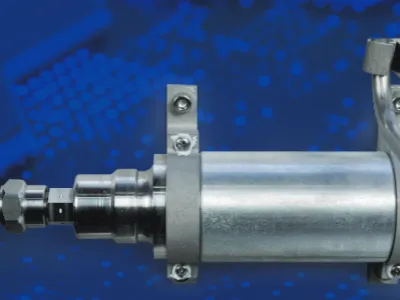
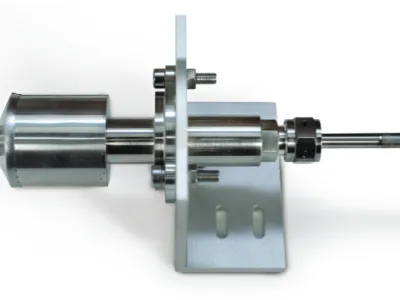
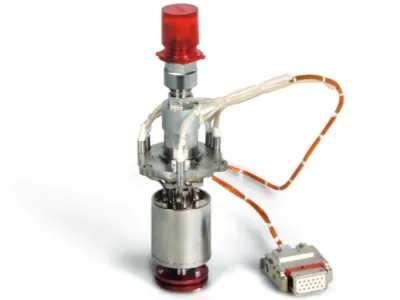
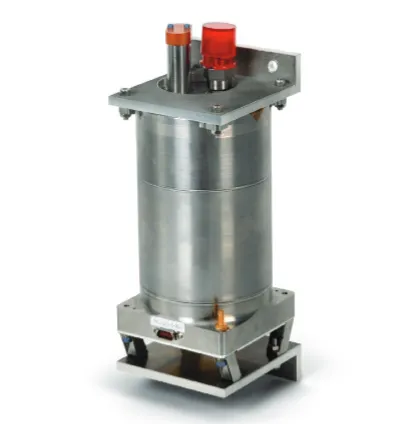
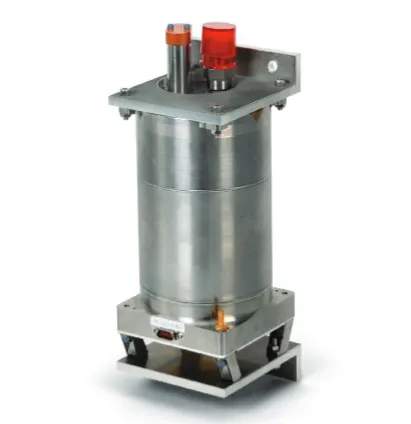
The Solid Cold-Gas Micropropulsion Module is a new-generation propulsion system based on solid gas-generating propellant technology. It consists of a gas generator, storage chamber, control circuitry, and sensors. The solid gas generator produces the required cold gas, which is supplied to the thruster assembly to generate precise thrust and torque for micro- and nano-satellite attitude and orbit control.
Key Specifications
| Parameter | Value |
|---|---|
| Dimensions (mm) | 96 × 96 × 98 |
| Mass (g) | 1200 |
| Total Impulse | 80 N·s |
| Mounting Material | TC4 (Titanium Alloy) |
| Operating Temperature (°C) | −15 to +55 |
| Storage Temperature (°C) | −40 to +95 |
| Communication Interface | RS-422 / CAN |
Key Features
- No high-pressure components.
- Long storage life.
- Lightweight, compact, and low power consumption.
- Modular design with strong scalability.
Applications
- Used in micro- and nano-satellite attitude and orbit control systems for long-term storage and reliable cold-gas propulsion.
Documentation & Resources
Frequently Asked Questions
Common questions about Solid Cold-Gas Micropropulsion Module
How does the Solid Cold-Gas Micropropulsion Module work?
A solid gas generator produces cold gas that is supplied to the thruster assembly, so the module needs no high-pressure components and supports long storage.
What total impulse does the module deliver?
The module provides a total impulse of 80 N·s for micro- and nano-satellite attitude and orbit control.
What storage temperature range does it tolerate?
It operates from −15 to +55°C and can be stored across a wide −40 to +95°C range for long on-orbit storage.
What communication interface does it use?
The module communicates over RS-422 or CAN, in a 96 × 96 × 98 mm titanium-alloy (TC4) housing weighing about 1200 g.
What platforms is the module designed for?
It targets micro- and nano-satellite attitude and orbit control needing reliable, long-storage cold-gas propulsion.