Visual Overview
Technical Details
Comprehensive specifications and technical information
Quick Overview
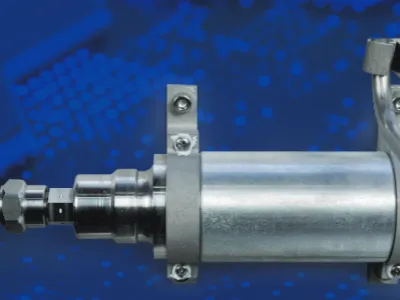
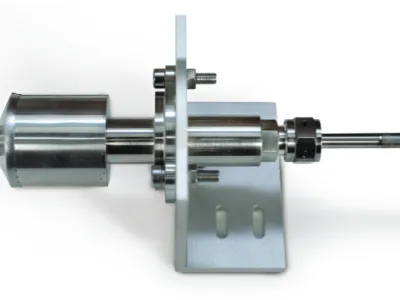
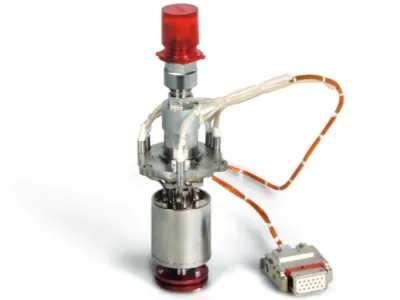
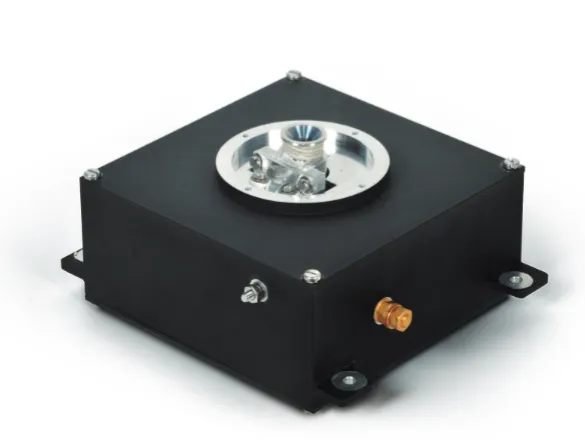
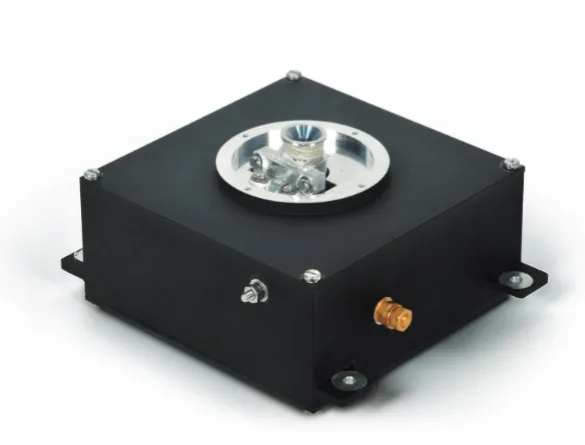
The Micro Cathode Arc Propulsion Module is a critical subsystem for orbit maintenance and attitude control of micro- and nano-satellites. It utilizes solid propellant and does not require a dedicated propellant feed system. The module supports long-term storage and features extremely low impulse bit (in the μN·s range), high efficiency, low mass, and simple structural design. It can be easily modularized and adapted for various missions, operating at low discharge voltages. The propulsion performance can be tuned through flexible control of the discharge frequency, making it suitable for precision satellite attitude control applications.
Key Specifications
| Parameter | Value |
|---|---|
| Dimensions (mm) | 100 × 100 × 40 |
| Mass (g) | 600 ± 50 |
| Propellant | Titanium / Tungsten |
| Operating Temperature (°C) | −15 to +55 |
| Storage Temperature (°C) | −30 to +55 |
| Communication Interface | CAN / RS-422 |
Key Features
- No dedicated propellant feed system required.
- Ultra-low impulse bit and high specific impulse.
- Lightweight, compact, and low power consumption.
- Fast modular assembly and quick diagnostics.
Applications
- Used in high-precision orbit maintenance and attitude control for micro- and nano-satellites requiring ultra-fine impulse and long operational lifespan.
Documentation & Resources
Frequently Asked Questions
Common questions about Micro Cathode Arc Propulsion Module
How does the Micro Cathode Arc Propulsion Module produce thrust?
It uses solid titanium or tungsten propellant ablated by a cathode arc, so no dedicated propellant feed system is required.
What impulse bit does the module deliver?
It produces an extremely low impulse bit in the micro-newton-second range, tunable by adjusting the discharge frequency for precise attitude control.
What are the module dimensions and mass?
The module measures 100 × 100 × 40 mm with a mass of 600 ± 50 g.
What communication interface and temperature range apply?
It communicates over CAN or RS-422 and operates from −15 to +55°C.
What are the main advantages for a satellite mission?
Its feed-system-free solid propellant lowers mass and complexity, while ultra-fine impulse and long storage life suit high-precision orbit maintenance on micro- and nano-satellites.