Visual Overview
Technical Details
Comprehensive specifications and technical information
Quick Overview
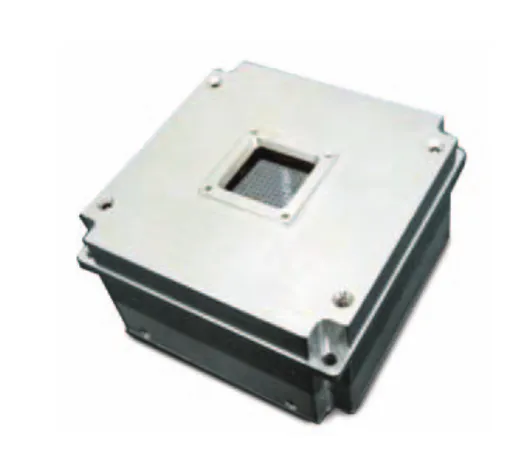
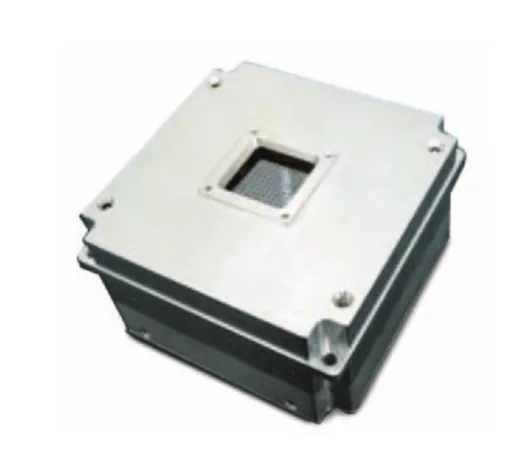
The MEMS Solid Micro-Thruster Array features a compact structure and flexible installation design. It integrates standard interfaces, self-contained control, and drive modules, making it ideal for attitude and orbit control of micro- and nanosatellites. The array employs a pulsed working mode, allowing precise selection and activation of individual micro-thruster elements to provide accurate impulse or torque output.
Key Specifications
| Parameter | Value |
|---|---|
| Dimensions (mm) | 70 × 70 × 30 |
| Mass (g) | 200 |
| Impulse Range | 10⁵–10⁶ N·s |
| Mounting Material | 2A12–H112 |
| Operating Temperature (°C) | −15 to +55 |
| Storage Temperature (°C) | −30 to +55 |
| Communication Interface | CAN / RS-422 |
Key Features
- MEMS-based technology with a pipeline-free and valveless design.
- Long on-orbit storage life.
- Lightweight and compact structure.
- “Digital” variable thrust capability.
Applications
- Used in nanosatellite attitude and orbit control, providing precise pulsed micro-thrust for fine maneuvering and stabilization.
Documentation & Resources
Frequently Asked Questions
Common questions about MEMS Solid Micro-Thruster Array
How does the MEMS Solid Micro-Thruster Array generate thrust?
It uses a MEMS-based, pipeline-free and valveless design in a pulsed working mode, selectively firing individual micro-thruster elements for precise impulse output.
What are the array dimensions and mass?
The array measures 70 × 70 × 30 mm with a mass of about 200 g, built on a 2A12-H112 mounting.
What temperature range does the array support?
It operates from −15 to +55°C and can be stored from −30 to +55°C.
What communication interface does it use?
The array communicates over CAN or RS-422.
What missions is the thruster array intended for?
It is designed for nanosatellite attitude and orbit control, providing precise pulsed micro-thrust for fine maneuvering and stabilization.