Visual Overview
Technical Details
Comprehensive specifications and technical information
Quick Overview
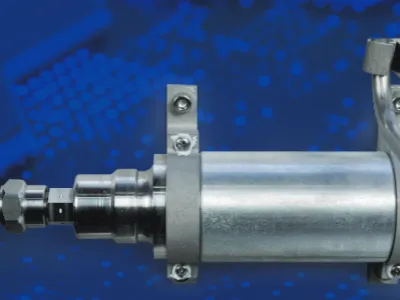
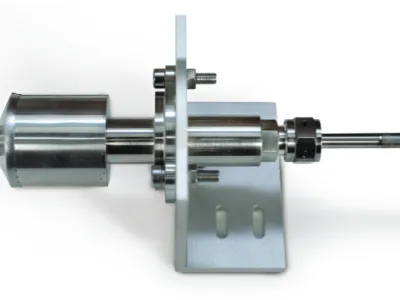
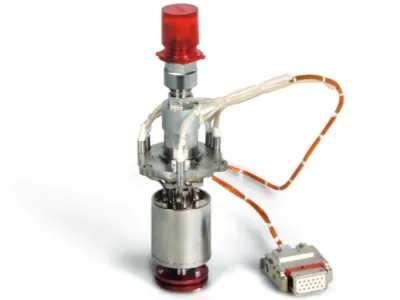
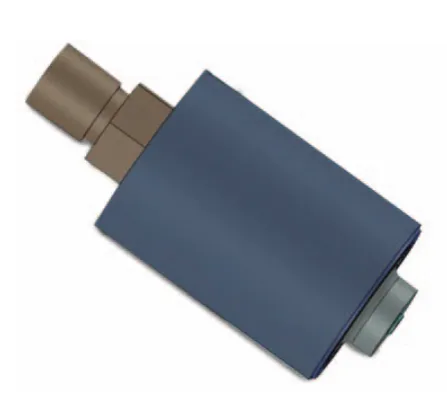
The 1–15 mN Electromagnetic Ratio Cold-Gas Thruster adopts a non-contact, frictionless screw-type electromagnetic drive mechanism that allows precise control of thrust output through continuous adjustment of the drive signal. This continuously variable thrust system is particularly suited for fine attitude control of micro- and small-satellites, as well as for scientific or formation-flying satellites requiring ultra-high-precision control and disturbance compensation.
Key Specifications
| Parameter | Value |
|---|---|
| Dimensions (mm) | Φ21 × Φ21 × 48 |
| Mass (g) | ≤ 40 |
| Mounting Material | 1Cr18Ni9Ti |
| Operating Temperature (°C) | −5 to +65 |
| Storage Temperature (°C) | −5 to +70 |
| Electrical Interface | Dual FY1–2 connectors with 3-line configuration |
| Thrust Range | 1–15 mN |
Key Features
- Long operational life and high reliability.
- Non-contact, frictionless proportional control technology.
- Lightweight, compact, and low power consumption.
- Excellent adaptability to space environments.
Applications
- Used for micro-satellite fine attitude control and disturbance compensation in ultra-stable scientific missions and formation-flying spacecraft.
Documentation & Resources
Frequently Asked Questions
Common questions about 1 to 15 mN Electromagnetic Ratio Cold-Gas Thruster
What thrust range does this cold-gas thruster deliver?
It provides continuously variable thrust from 1 to 15 mN, adjusted through the drive signal for precise, proportional control.
How does the thruster achieve proportional thrust?
It uses a non-contact, frictionless screw-type electromagnetic drive that continuously varies thrust for fine attitude control and disturbance compensation.
How small and light is the unit?
The thruster measures Φ21 × Φ21 × 48 mm with a mass of no more than 40 g.
What temperature range does it tolerate?
It operates from −5 to +65°C and can be stored from −5 to +70°C.
What electrical interface does the thruster use?
It connects through dual FY1–2 connectors in a 3-line configuration, and its structure uses 1Cr18Ni9Ti stainless steel.