Visual Overview
Technical Details
Comprehensive specifications and technical information
Quick Overview
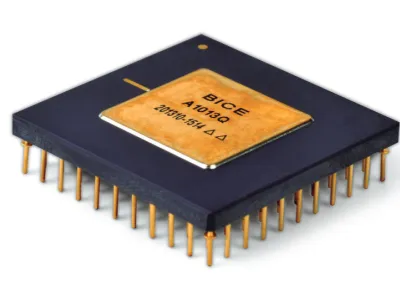
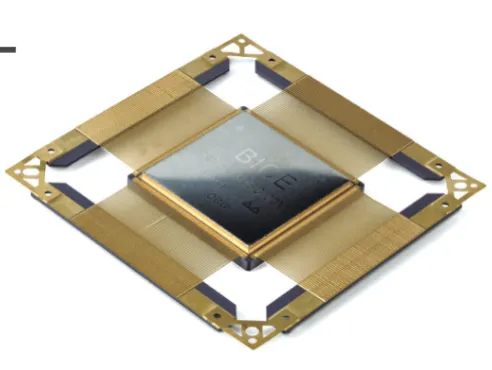
The SiP2115 is a micro onboard computer module based on the SoC2008 processor core. It integrates large-capacity SRAM data storage units and FLASH program storage units. Compared with traditional designs, it achieves more than 80% reduction in size, weight, and power consumption, with cost reduced by over 60%. The SiP2115 adopts a ceramic package and domestically produced radiation-hardened chips, making it suitable for high-reliability and long-lifetime space missions.
Key Specifications
| Parameter | Value |
|---|---|
| Function | Computing module functionality |
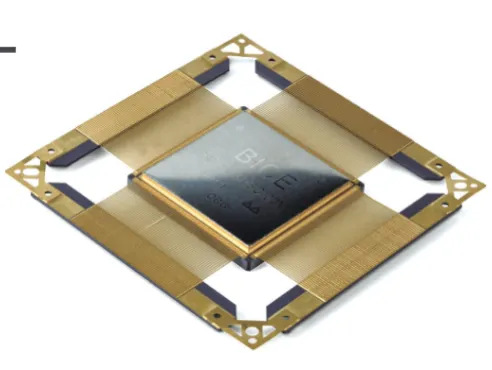
| Packaging Technology | Bare-die based packaging |
| Dimensions (mm) | 37 × 37 × 5 |
| Weight (g) | 23 |
| Operating Temperature (°C) | −55 to +125 |
| Storage Temperature (°C) | −65 to +150 |
| Communication Interface | 1553B / RS-422 |
| Package Type | CQFP256 ceramic package |
| Quality Grade | CAST C |
Key Features
- High functional integration with processor, memory, and bus controller.
- Miniaturized design — more than 80% reduction in size, weight, and power consumption.
- Cost-effective — manufacturing cost reduced by over 60%.
- Fully independent and controllable, using domestically produced bare-die chips.
Applications
- Used in microsatellites and embedded electronic systems, first flight in 2016.
Documentation & Resources
Frequently Asked Questions
Common questions about SiP2115 Universal Onboard Computer Module
What is the SiP2115 module based on?
The SiP2115 is built around the SoC2008 processor core and integrates large-capacity SRAM data storage and FLASH program storage. It provides 1553B and RS-422 interfaces.
What package does the SiP2115 use and why?
It uses a CQFP256 ceramic package with domestically produced radiation-hardened chips, making it suitable for high-reliability, long-lifetime space missions. The module measures 37 x 37 x 5 mm and weighs about 23 g.
How much does the SiP2115 reduce size, weight, and power?
Compared with traditional designs it cuts size, weight, and power consumption by more than 80% and reduces cost by over 60%.
What temperature range and flight heritage does it have?
The SiP2115 operates from -55 to +125 C, stores from -65 to +150 C, and first flew in 2016.