Visual Overview
Technical Details
Comprehensive specifications and technical information
Quick Overview
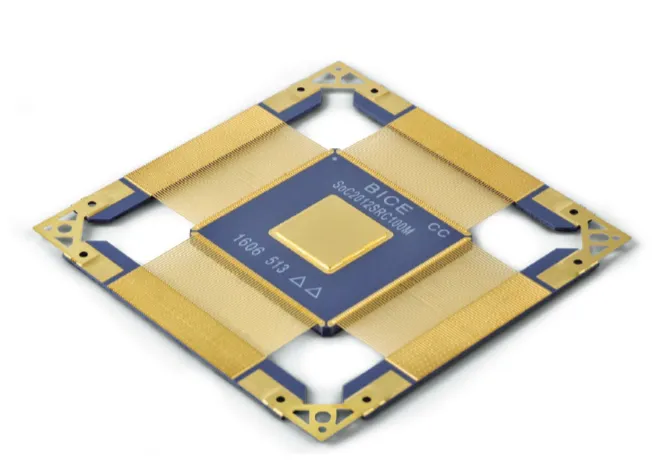
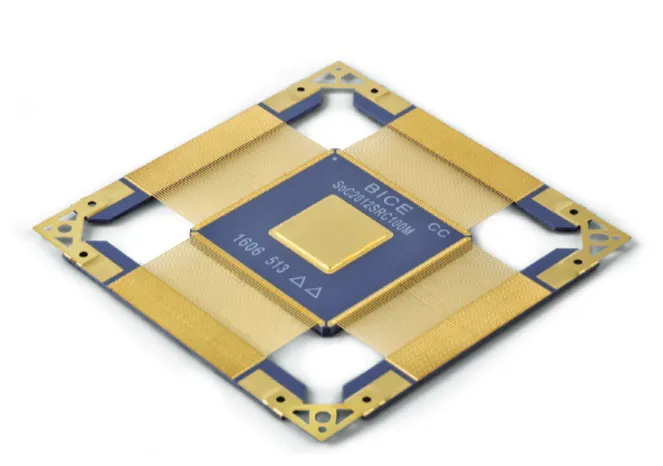
The SoC2012 is the first domestically developed high-performance quad-core SoC designed for satellite onboard computing. It integrates four SPARC V8 cores with a total processing performance exceeding 300 MIPS @ 100 MHz. With a power consumption below 1 W, the SoC2012 outperforms comparable European and American products, achieving world-class performance levels for satellite applications.
Key Specifications
| Parameter | Value |
|---|---|
| Process Technology | 0.13 μm |
| Dimensions (mm) | 37 × 37 × 3 |
| Weight (g) | 12 |
| Operating Temperature (°C) | −55 to +125 |
| Storage Temperature (°C) | −65 to +150 |
| Communication Interface | 1553B / RS-422 |
| Package Type | CQFP256 |
| Quality Grade | CAST C |
Key Features
- High functional integration with four V8 processor cores, floating-point unit, and 1553B bus controller.
- High computational performance exceeding 300 MIPS @ 100 MHz.
- Excellent radiation tolerance with triple modular redundancy and radiation-hardened units.
- Independently developed and fully controllable technology.
Applications
- Microsatellites and embedded electronic systems requiring high-performance onboard computing, first flight in 2015.
Documentation & Resources
Frequently Asked Questions
Common questions about Quad-Core SoC2012 32-bit Space Application On-Chip System
What processing performance does the SoC2012 deliver?
The SoC2012 integrates four SPARC V8 cores with total processing performance exceeding 300 MIPS at 100 MHz, while consuming below 1 W of power.
How is the SoC2012 protected against radiation?
It uses triple modular redundancy together with radiation-hardened units, and integrates a floating-point unit and a 1553B bus controller alongside the four cores.
What interfaces and package does the SoC2012 use?
The chip provides 1553B and RS-422 interfaces in a CQFP256 package at CAST C grade, measuring 37 x 37 x 3 mm and weighing about 12 g.
Does the SoC2012 have flight heritage?
Yes. It first flew in 2015 and is used in microsatellites and embedded electronic systems requiring high-performance onboard computing.