Visual Overview
Technical Details
Comprehensive specifications and technical information
Quick Overview
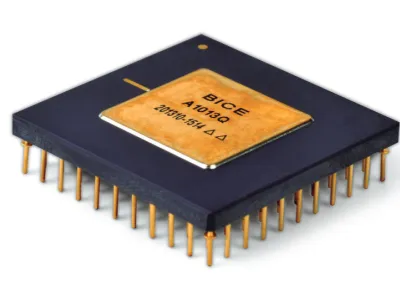
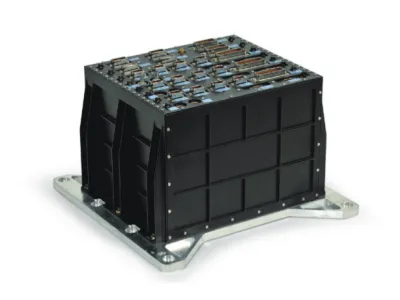
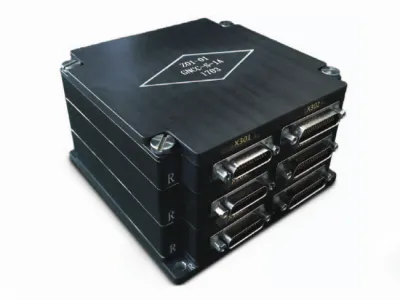
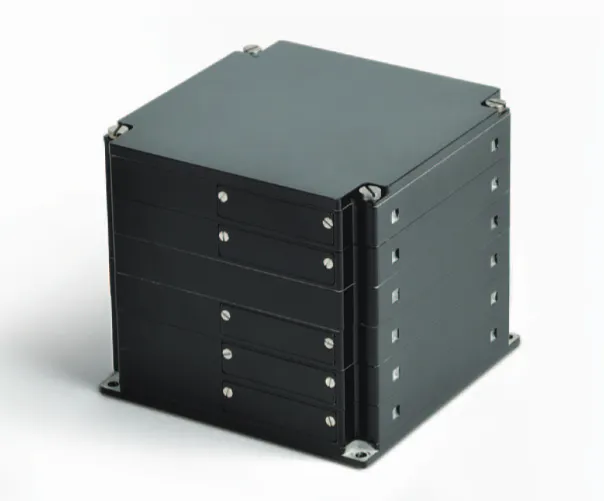
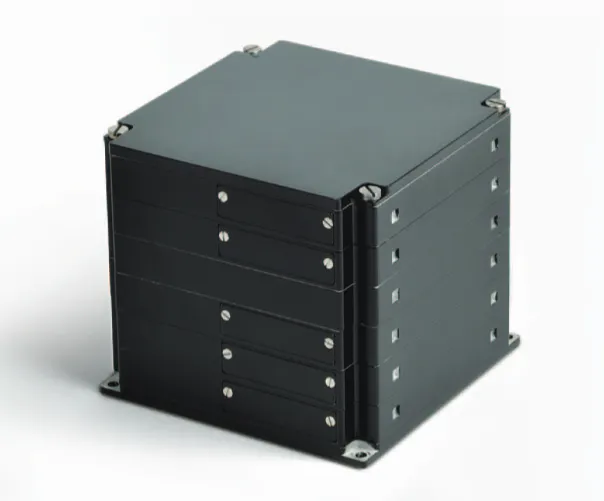
The NASSAT Dual-Module Computer is an enhanced version of the NASSAT onboard computer, designed for longer lifespan and higher reliability in micro- and nanosatellite applications. It adopts SiP and SoC technologies with a dual-computer redundant architecture and integrated fault management module. The system provides superior reliability, performance, compact structure, lightweight design, and low power consumption, making it ideal for demanding space missions.
Key Specifications
| Parameter | Value |
|---|---|
| Model | C-GNCC-DMR/C-7 |
| Technology | SiP / SoC |
| Flight Record | First flight in 2018 |
| Dimensions (mm) | 130 × 130 × 165.5 |
| Weight (kg) | 1.5 ± 0.1 |
| Service Life (years) | 3–5 |
| Operating Temperature (°C) | −35 to +70 |
| Storage Temperature (°C) | −45 to +80 |
| Communication Interface | CAN / RS422 / I²C |
| Power Supply | +5 V, +12 V / −12 V |
Key Features
- High performance — equipped with the high-performance SoC2008 processor.
- High reliability — dual-module redundancy with full fault-tolerant management capability.
- Compact structure — designed using the SiP2115 onboard computer module.
- Lightweight — total weight approximately 1.5 kg.
Applications
- Used as a high-reliability central control computer in micro- and nanosatellite systems.
Documentation & Resources
Frequently Asked Questions
Common questions about NASSAT Dual-Module Computer
How does the NASSAT Dual-Module Computer achieve high reliability?
It uses a dual-computer redundant architecture with an integrated fault management module for full fault-tolerant operation. It is built on the SoC2008 processor and the SiP2115 onboard computer module.
What interfaces and supply voltages are provided?
The computer offers CAN, RS-422, and I2C interfaces and operates from +5 V and +12 V / -12 V supplies. It first flew in 2018 under model C-GNCC-DMR/C-7.
What are the size, mass, and service life?
The unit measures 130 x 130 x 165.5 mm, weighs about 1.5 kg (1.5 +/- 0.1 kg), and has a service life of 3 to 5 years.
What temperature range does it tolerate?
It operates from -35 to +70 C and can be stored from -45 to +80 C, suitable for micro- and nanosatellite missions requiring high reliability.