Visual Overview
Technical Details
Comprehensive specifications and technical information
Near Space Aircraft Energy System
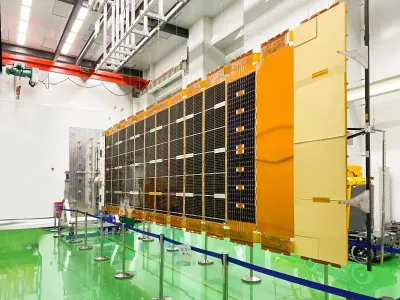
Explore the Near Space Aircraft Energy System designed for altitudes of 20 km to 100 km. Featuring a modular solar array, energy storage, and energy management, this system offers long endurance, low cost, and reliable energy solutions for unmanned airships and aircraft.
Product Features
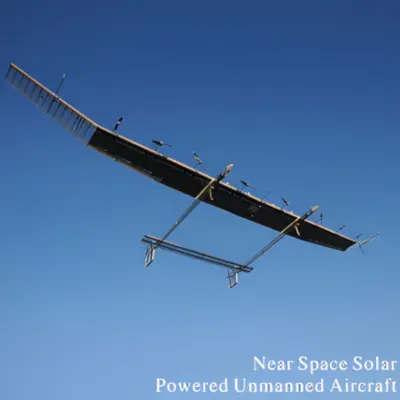
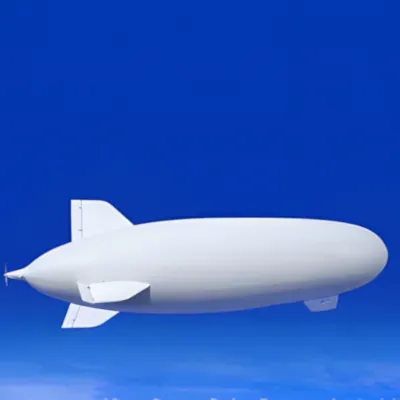
Near space refers to airspace at an altitude of 20 km to 100 km. Aircraft operating in this airspace are called near space aircraft, which mainly include stratospheric airships, floating balloons, and high-altitude, long-endurance airplanes.
Compared to traditional aircraft and satellites, near space aircraft have advantages such as long endurance, low cost, all-weather capabilities, and repeatable takeoff and landing. Additionally, they cannot be easily detected or attacked. These aircraft are widely used in fields like early warning detection, communication broadcasting, and electronic countermeasures.
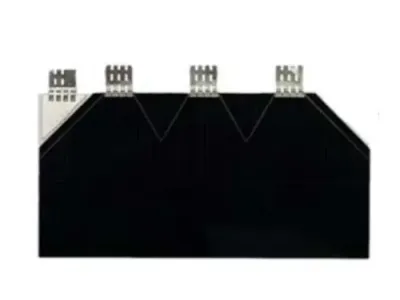
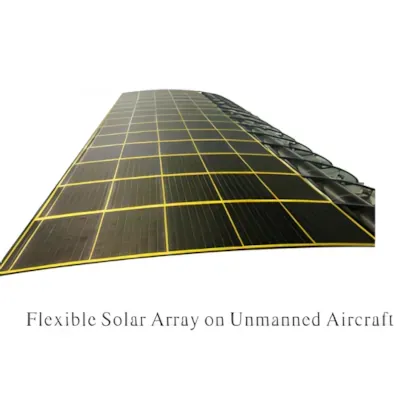
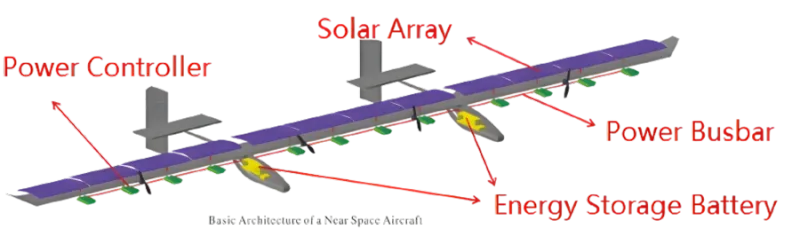
The company has constructed an energy system architecture comprising solar array, energy storage, and energy management. It adopts a distributed modular design, achieving a closed-loop system of “energy generation - energy storage - energy supply” for different aircraft.
Applications
- The products can be applied in high-resolution platforms for observing the Earth, 5G base stations for emergencies, and high-altitude communication relay platforms.
- A dedicated solution provider and manufacturer for near space aircraft energy systems.
Basic Architecture of a Near Space Aircraft
- Solar Array
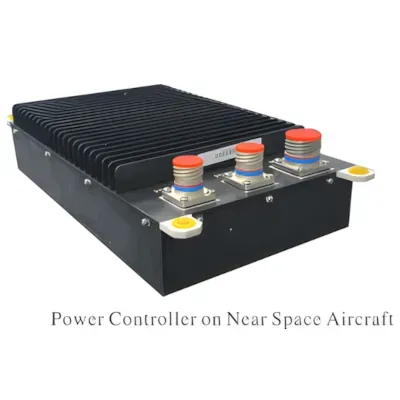
- Power Controller
- Power Busbar
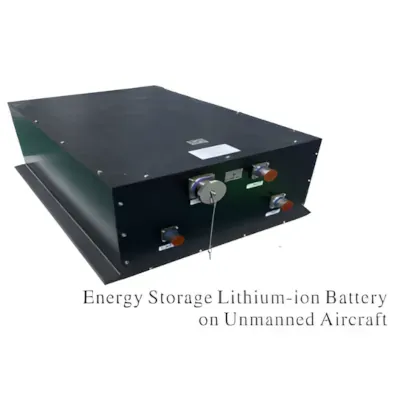
- Energy Storage Battery
Parameters
| Configuration | Solar Powered Unmanned Aircraft Energy System | Solar Powered Unmanned Airship Energy System |
|---|---|---|
| Key Performance Parameters | ||
| Service Life | Calendar life ≥ 3 years | Calendar life ≥ 3 years |
| Flight Duration | ≥ 24h - 30 days | ≥ 24h - 90 days |
| Conversion Efficiency of Silicon Solar Array | 22.5% | 22.5% |
| Conversion Efficiency of High-Efficiency Solar Array | ≥ 30% | ≥ 30% |
| Maximum Discharge Rate of Energy Storage Battery | 1C | 3C |
| Energy Storage Battery System | High energy battery | High energy battery |
| Energy Density | 450 - 500 Wh/kg | 300 - 350 Wh/kg |
| Controller Operating Efficiency | 90% - 97% | 90% - 97% |
| Controller Weight to Power Ratio | 1.5 kW/kg - 2.5 kW/kg | 1.5 kW/kg - 2.5 kW/kg |
| Service Environment | ||
| Service Altitude | 0 - 30 km | 0 - 25 km |
| Service Temperature | -90°C to +70°C | -90°C to +70°C |
Frequently Asked Questions
Common questions about Near Space Aircraft Energy System - Solar Array & Energy Management
What are the primary advantages of triple-junction photovoltaic cells over dual-junction cells for SolarWing's Near Space Aircraft Energy System?
SolarWing's Near Space Aircraft Energy System leverages triple-junction photovoltaic cells for superior performance. A primary advantage over dual-junction cells is significantly higher energy conversion efficiency. Triple-junction cells utilize three distinct semiconductor layers (e.g., GaInP, GaAs, Ge), each optimized to absorb a different portion of the solar spectrum—from high to low energy photons. This broad spectral utilization enables greater power generation from a smaller array area, crucial for mass and volume constrained near-space aircraft. This optimized energy capture ensures robust power delivery for sustained operations and demanding onboard systems, even in dynamic atmospheric and thermal conditions.
What missions is this product suitable for?
Ideal for stratospheric airships (20-25km altitude) and high-altitude long-endurance aircraft (0-30km altitude). Perfect for early warning detection, communication broadcasting, electronic countermeasures, emergency 5G base stations, and high-resolution Earth observation platforms requiring persistent surveillance.
How does this product compare to related products?
Superior to traditional aircraft and satellites with advantages including long endurance (24h-90 days), low operational costs, all-weather capabilities, and repeatable takeoff/landing. Distributed modular design provides complete "energy generation-storage-supply" closed-loop system unlike conventional power solutions.
What are the key technical advantages?
Exceptional solar array efficiency (22.5% silicon, ≥30% high-efficiency) with advanced energy storage systems (300-500 Wh/kg). High-performance controllers achieve 90-97% efficiency with excellent weight-to-power ratios (1.5-2.5 kW/kg). Operates reliably in extreme temperatures (-90°C to +70°C).
What environmental conditions can this system operate in?
The system is engineered for extreme near-space environments from -90°C to +70°C, operating reliably at altitudes up to 30km for aircraft and 25km for airships. Its robust design withstands intense UV radiation, low atmospheric pressure, and temperature fluctuations while maintaining consistent power generation and storage efficiency throughout extended mission durations.