Visual Overview
Technical Details
Comprehensive specifications and technical information
Product Introduction
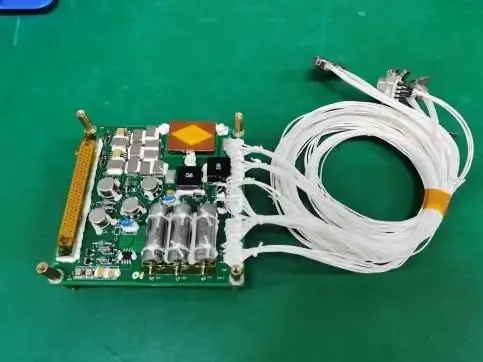
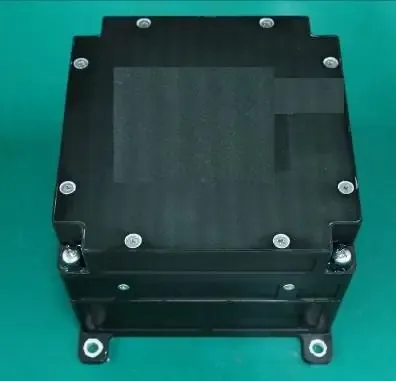
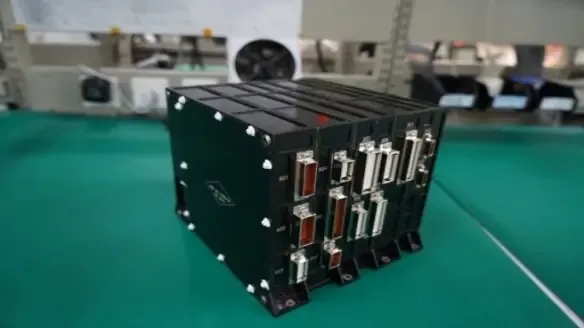
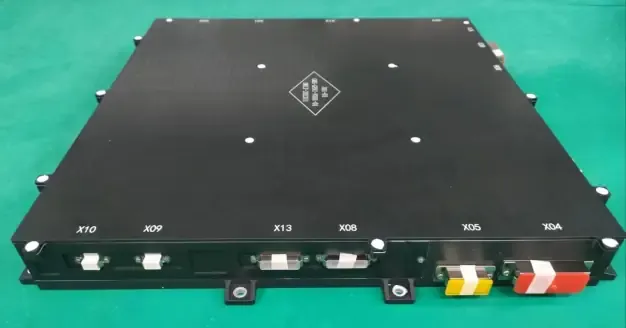
Our Control Tech Products represent a paradigm shift in aerospace power control and distribution equipment. With a wide BUS voltage range and multiple regulation methods, our equipment is tailored to meet the diverse needs of modern aerospace applications. From satellites to rockets and spacecraft, our products ensure reliable and efficient power distribution in any environment.
Product Image
Product Features
- Highly Reliable: Our products undergo rigorous environmental adaptability testing to ensure stable operation in extreme conditions.
- Intelligent Control: Equipped with overcurrent protection and automatic control of self-powered energy, our products offer intelligent power management.
- Modular Design: Using advanced materials and technology, our products feature a modular or plug-in design, reducing weight and facilitating expansion and maintenance.
Technical Specifications
PCDU Product Series
| Indicator parameters | series 1 | series 2 | series 3 | series 4 | series 5 |
|---|---|---|---|---|---|
| Output voltage (V) | 33~45.1 | 33~45.1 | 21~28.7 | 28±0.4V | 21~29.4V |
| Adjustment method | S3R Unregulated | MPPT Unregulated | S3R Unregulated | S4R Full adjustment | MPPT Unregulated |
| Output power (W) | 3000 | 3150 | 1000 | 400 | 800 |
| Solar array regulator - Working current (single stage) (A) | ≤7(350W) | ≤9 | ≤7 | ≤7.2 | ≤7 |
| Working temperature | -25℃~60℃ | -25℃~60℃ | -25℃~60℃ | -25℃~60℃ | -25℃~60℃ |
| Efficiency | ≥95% (Typical value) | ≥92% (Typical value) | ≥95% (Typical value) | ≥95% (Typical value) | ≥92% (Typical value) |
| Efficiency stability | ±0.5% | ±0.5% | ±0.5% | ±0.5% | ±0.5% |
| Self-powering function | YES | YES | YES | YES | YES |
| Unlock circuit | Memory alloy Hot knife Pin puller | Memory alloy Hot knife Pin puller | Memory alloy Hot knife Pin puller | Memory alloy Hot knife Pin puller | Memory alloy Hot knife Pin puller |
| BUS communication | CAN/RS422 | CAN/RS422 | —— | CAN/RS422 | —— |
| Life expectancy (years) | >5 | >5 | >5 | >5 | >5 |
| Weight (kg) | 11.5 | ≤6 | ≤8 | ≤6.5 | ≤8 |
| External dimensions (mm) | 280×260×190 | 400×400×50 | 280×180×200 | 210×216×170 | 225×274×190 |
PCDU Product Series
| Indicator parameters | series 1 | series 2 |
|---|---|---|
| BUS voltage (V) | 42 | 28 |
| Number of primary bus distribution circuits | —— | 10 Lines |
| Number of secondary distribution circuits | 28 Lines | 13 Lines |
| Primary distribution output power (W) | —— | 1500 |
| Secondary distribution output power | +5.5V 100W +12V 35W -12V 12W | +5.2V 25W +12V 90W -12V 2W |
| Life expectancy (years) | >5 | >5 |
| Weight (kg) | ≤1.4 | ≤0.9 |
| External dimensions (mm) | 160×233.35×35 | 160×233.35×26 |
Typical Applications
Widely used in various aerospace devices, such as satellites, rockets, spacecraft, etc., it can provide stable and reliable power support for aerospace equipment, ensuring the successful execution of aerospace missions.
Explore more of our aerospace solutions.
Frequently Asked Questions
Common questions about Control Tech Products: Advanced Power Control and Distribution Equipment for Aerospace
How does your power control equipment optimize solar array output during periods of high radiation or solar flares?
Our power control and distribution units are designed to mitigate the effects of radiation events on solar array performance. Advanced algorithms dynamically adjust the load to maximize power extraction from the solar arrays even when individual cell performance is degraded by radiation. This includes sophisticated MPPT (Maximum Power Point Tracking) that adapts to the changing I-V characteristics of the array and protects sensitive components from overvoltage surges.
What missions is this product suitable for?
Perfect for satellites, spacecraft, rockets, and aerospace platforms requiring reliable power distribution and regulation. Ideal for missions demanding high efficiency (≥95%) and stable operation in extreme temperatures (-25°C to 60°C).
How does this product compare to related products?
Unlike basic power controllers, our PCDU series offers multiple regulation methods (S3R, MPPT, S4R), wide voltage ranges (21-45.1V), and intelligent control features. Superior efficiency stability (±0.5%) and modular design provide enhanced reliability over conventional aerospace power systems.
What are the key technical advantages?
Key advantages include high conversion efficiency (92-95%), overcurrent protection, automatic self-powered energy control, and advanced unlock circuits using memory alloy technology. Multiple series options support power outputs from 400W to 3150W with proven 5+ year operational lifetimes.
How does it integrate with other systems?
Features CAN/RS422 BUS communication for seamless integration with spacecraft command and control systems. Multiple voltage output options (+5.5V, +12V, -12V) support various subsystem requirements. Modular plug-in design enables easy integration with existing aerospace power architectures.