Visual Overview
Technical Details
Comprehensive specifications and technical information
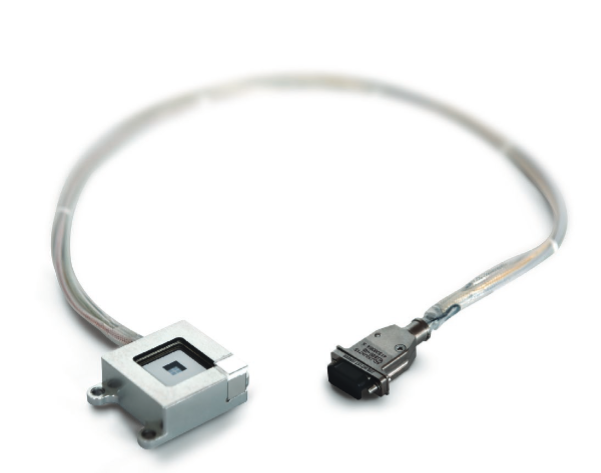
Dual-Axis Micro Analog Solar Sensor
Quick Overview
The dual-axis micro analog solar sensor uses four silicon photodiodes as the sensing elements to measure the solar incident angle in two axes.
Key Specifications
| Parameter | Value |
|---|---|
| Model | C-SS-SiC-Ana/B-2B |
| Measurement Accuracy | < 0.5° |
| Flight Heritage | First flight in 2015 |
| Application | Microsatellite |
| Dimensions (mm) | 40 × 34.5 × 13.5 |
| Weight (g) | 37 |
| Mounting Material | LY12 BCZYu |
| Operating Temperature (°C) | −100 to +90 |
| Storage Temperature (°C) | −105 to +105 |
| Communication Interface | Analog current signal output |
Key Features
- Low cost and high reliability.
- Lightweight and compact design.
- Wide operating temperature range and strong radiation resistance.
Applications
- Used in microsatellite systems for sun vector measurement and solar array attitude detection.
Related Products
- See related products in this series
Documentation & Resources
Frequently Asked Questions
Common questions about Dual-Axis Micro Analog Solar Sensor
How can your dual-axis solar sensor data be used to optimize reaction wheel performance and longevity in a satellite?
Our Dual-Axis Micro Analog Solar Sensor provides precise solar vector data crucial for optimizing reaction wheel usage. By accurately tracking the sun's position, the sensor allows for efficient solar panel pointing, maximizing power generation. This reduces the frequency and duration of battery discharge/recharge cycles, thus minimizing the load on reaction wheels needed for attitude correction due to power fluctuations. Optimized power management extends the lifespan of both the battery and the reaction wheels, leading to increased mission duration.
What spacecraft platforms is this system compatible with?
This system is compatible with microsatellites, nanosatellites, CubeSats, and larger spacecraft platforms. It features modular design with standard interfaces for easy integration into various mission architectures and supports both commercial and scientific applications.
How does this system enhance spacecraft capabilities?
The system provides advanced functionality with reduced size, weight, and power consumption. It offers improved reliability through redundancy, radiation tolerance, and proven space-qualified components with extensive flight heritage.
What are the key performance specifications?
Key specifications include low power consumption, wide operating temperature range, high radiation tolerance (TID >100 krad), compact form factor, and long operational lifetime (>10 years). The system meets all relevant space qualification standards.
How is system integration and testing performed?
We provide comprehensive integration support including detailed interface specifications, test procedures, and simulation tools. All systems undergo thorough environmental testing, functional verification, and compatibility validation before delivery.