Visual Overview
Technical Details
Comprehensive specifications and technical information
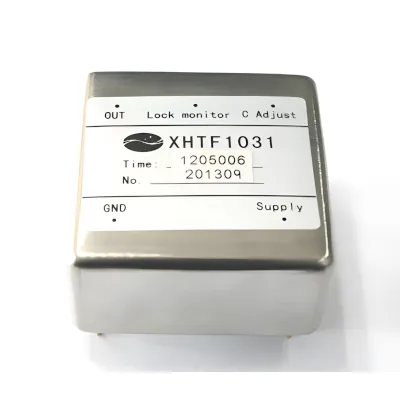
XHTF1031R Miniature Rb Atomic Clock
Overview
The XHTF1031R Miniature Rb Atomic Clock combines compact design with high precision timing capabilities. For detailed information, please contact us.
Features
- Miniature structure
- +12V low power supply, low consumption
- Compatible with SA.3 series atomic clock
- Widely assembled on the time frequency system for aviation, aerospace, communication, network etc.
Main Specifications
Core Specifications
| Specification | Typical | High performance | |
|---|---|---|---|
| Phase Noise (SSB) | @10Hz | <-100dBc/Hz | <-105dBc/Hz |
| @100Hz | <-120dBc/Hz | <-135dBc/Hz | |
| @1KHz | <-135dBc/Hz | <-140dBc/Hz |
| Specification | Typical | High performance | |
|---|---|---|---|
| Operating temperature | -J | +15℃~+65℃ ≤2E-10 | -30℃~+65℃ ≤8E-10 |
| -C | -20℃~+15℃ ≤6E-10 | ||
| -H | +40℃~+70℃ ≤2E-10 | -30℃~+70℃ ≤8E-10 |
Pin Connection Details
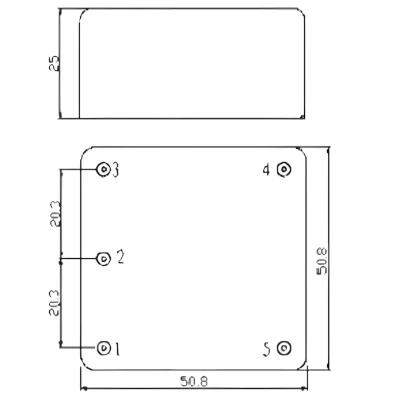
| Pin Number | Function | Description |
|---|---|---|
| 1 | Freq. adjust | For freq. adjust, input 0~5V |
| 2 | EL lock | CMOS lock 0V unlock 5V |
| 3 | 10MHz output | 10MHz output terminal |
| 4 | GND | For power & signal |
| 5 | +12V | Power port, + |
Frequently Asked Questions
Common questions about XHTF1031R Miniature Rb Atomic Clock
For precision timing applications, what are the recommended calibration intervals for the XHTF1031R Miniature Rb Atomic Clock, and what factors might necessitate more frequent calibrations in space?
While the XHTF1031R boasts excellent long-term stability, periodic calibration is recommended to maintain optimal precision timing. A typical interval is annually, but this can vary. Factors increasing the need for calibration include extended exposure to high radiation environments which can subtly influence the Rb resonance frequency, and large temperature swings. Monitoring the clock's performance using telemetry data is crucial. A noticeable drift beyond specified limits indicates the need for recalibration, either on-orbit (if equipped) or during scheduled maintenance.
What applications require this atomic clock?
This atomic clock is essential for satellite navigation systems, deep space communications, scientific research, precision timing networks, and synchronization of distributed systems. It provides ultra-stable frequency references for critical space and ground applications.
How does this compare to other atomic clocks?
Our atomic clocks offer superior frequency stability, lower power consumption, compact size, and enhanced radiation tolerance compared to conventional designs. They maintain exceptional accuracy over extended mission durations in harsh space environments.
What is the expected operational lifetime?
The atomic clock is designed for 15+ years of continuous operation in space. It features redundant systems, radiation-hardened components, and proven reliability with extensive flight heritage on navigation satellites and deep space missions.
How is the clock synchronized and monitored?
The system includes comprehensive telemetry interfaces for real-time performance monitoring, remote diagnostics, and synchronization with ground stations. It supports standard timing protocols and provides detailed health status reporting.