Visual Overview
Technical Details
Comprehensive specifications and technical information
Overview
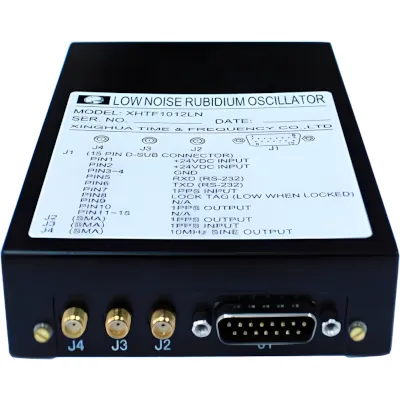
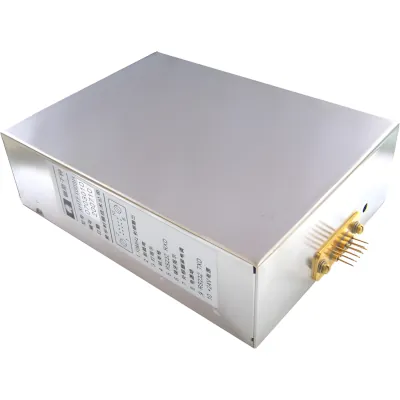
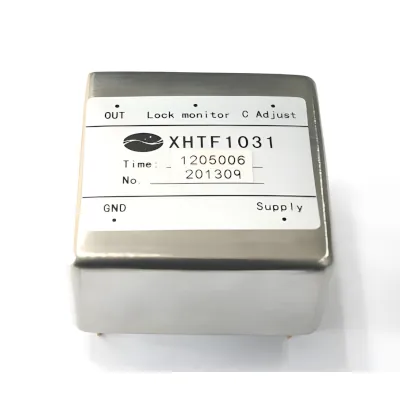
Rubidium atomic clocks are designed for applications requiring exceptional frequency accuracy and reliability. Their compact structure and low power consumption make them ideal for use in demanding environments, including aerospace, military vessels, and satellite navigation systems.
Products
Applications
-
Aerospace: Satellite navigation and space exploration.
-
Defense: Radar and military communication systems.
-
Telecommunications: Network synchronization and timing.
-
Power grids: Frequency stability for power system operations.
External Resources
For further technical specifications and usage guidance, visit the NIST Rubidium Atomic Clock Page.
For more information about our high-precision atomic clock solutions, or to discuss how these can enhance your projects, please contact us.
Frequently Asked Questions
Common questions about Rubidium Atomic Clocks
How does SolarWing's Rubidium Atomic Clock compensate for relativistic effects in space to maintain kd precision timing?
SolarWing's Rb atomic clocks are engineered to account for both special and general relativistic effects, critical for maintaining kd precision timing in space. We incorporate pre-launch frequency offset calibrations based on predicted orbital parameters and gravitational potential. On-orbit adjustments, achieved through a digitally controlled oscillator, compensate for the continuously changing relativistic environment. This ensures the clock's output remains highly stable and accurate relative to a terrestrial reference frame, supporting precise navigation and scientific data correlation.
What applications require this atomic clock?
This atomic clock is essential for satellite navigation systems, deep space communications, scientific research, precision timing networks, and synchronization of distributed systems. It provides ultra-stable frequency references for critical space and ground applications.
How does this compare to other atomic clocks?
Our atomic clocks offer superior frequency stability, lower power consumption, compact size, and enhanced radiation tolerance compared to conventional designs. They maintain exceptional accuracy over extended mission durations in harsh space environments.
What is the expected operational lifetime?
The atomic clock is designed for 15+ years of continuous operation in space. It features redundant systems, radiation-hardened components, and proven reliability with extensive flight heritage on navigation satellites and deep space missions.
How is the clock synchronized and monitored?
The system includes comprehensive telemetry interfaces for real-time performance monitoring, remote diagnostics, and synchronization with ground stations. It supports standard timing protocols and provides detailed health status reporting.