Visual Overview
Technical Details
Comprehensive specifications and technical information
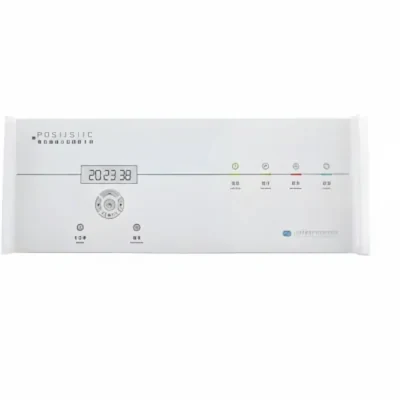
TA1100 Optically-pumping Cesium Atomic Clock
Overview
The TA1100 Optically-pumping Cesium Atomic Clock is a high-performance atomic clock that adopts optical-pumping and laser test technologies. With compact size, low power consumption, and excellent frequency stability, it is tailored for time synchronization, frequency measurement, and atomic timekeeping systems. For inquiries, please contact us.
Features
- Adopt optical-pumping and laser test technology.
- Small size, low consumption, and high performance.
- Automatically monitor and record operation status.
- Wide operating temperature range.
Main Specifications
General Specifications
| Specification | Details |
|---|---|
| Frequency Accuracy | ≤1E-12 |
| Frequency Stability | ≤1.2E-11/1s ≤8.5E-12/10s ≤2.7E-12/100s ≤8.5E-13/1000s ≤2.7E-13/10000s ≤8.5E-14/100000s |
| Frequency Reproducibility | ≤5E-13 |
| Manual Sync Range | ±1E-9 |
| Resolution | 1E-15 |
| Warm-up Time | ≤40min at +20°C ≤2 hours at -10°C |
| Power Voltage (Customizable) | DC: -40VDC AC: 100VAC |
| Power Consumption | Warm-up: ≤130W (DC supply) Stable: ≤80W (DC supply, 25°C) |
| Operating Temperature | -10°C to +40°C |
| Storage Temperature | -20°C to +50°C |
| Weight | ≤30 kg |
| External Dimensions | 45 x 45.6 x 177 mm³ |
| MTBF | ≥100,000 hours |
| Service Life | ≥8 years |
Output Signals
| Signal Type | Details |
|---|---|
| 10 MHz Sine Wave (Standard) | Channels: 2 Amplitude: 7~13 dBm Harmonic: ≤-40 dBc Non-harmonic: ≤-80 dBc Phase Noise: @1Hz: ≤-90 dBc/Hz @10Hz: ≤-125 dBc/Hz @100Hz: ≤-140 dBc/Hz @1kHz: ≤-150 dBc/Hz @10kHz: ≤-150 dBc/Hz |
| 2.048 MHz (Optional) | Channels: 2 Signal Feature: FPGA Code |
| 1PPS TTL (Optional) | Signal Level: 5V TTL Rising Time: ≤10 ns Sync Accuracy: ≤20 ns Jitter: ≤1 ns |
Applications
- Atomic time-keeping clock sets.
- Communication, power, and transportation industries.
- Time synchronization systems.
- Precision time-frequency measurement.
Frequently Asked Questions
Common questions about TA1100 Optically-pumping Cesium Atomic Clock
What applications require this atomic clock?
This atomic clock is essential for satellite navigation systems, deep space communications, scientific research, precision timing networks, and synchronization of distributed systems. It provides ultra-stable frequency references for critical space and ground applications.
How does this compare to other atomic clocks?
Our atomic clocks offer superior frequency stability, lower power consumption, compact size, and enhanced radiation tolerance compared to conventional designs. They maintain exceptional accuracy over extended mission durations in harsh space environments.
What is the expected operational lifetime?
The atomic clock is designed for 15+ years of continuous operation in space. It features redundant systems, radiation-hardened components, and proven reliability with extensive flight heritage on navigation satellites and deep space missions.
How is the clock synchronized and monitored?
The system includes comprehensive telemetry interfaces for real-time performance monitoring, remote diagnostics, and synchronization with ground stations. It supports standard timing protocols and provides detailed health status reporting.
What environmental conditions can it withstand?
The atomic clock operates reliably in extreme temperatures (-40°C to +70°C), high radiation environments, and zero gravity. It meets stringent space qualification standards for vibration, shock, and electromagnetic compatibility.